
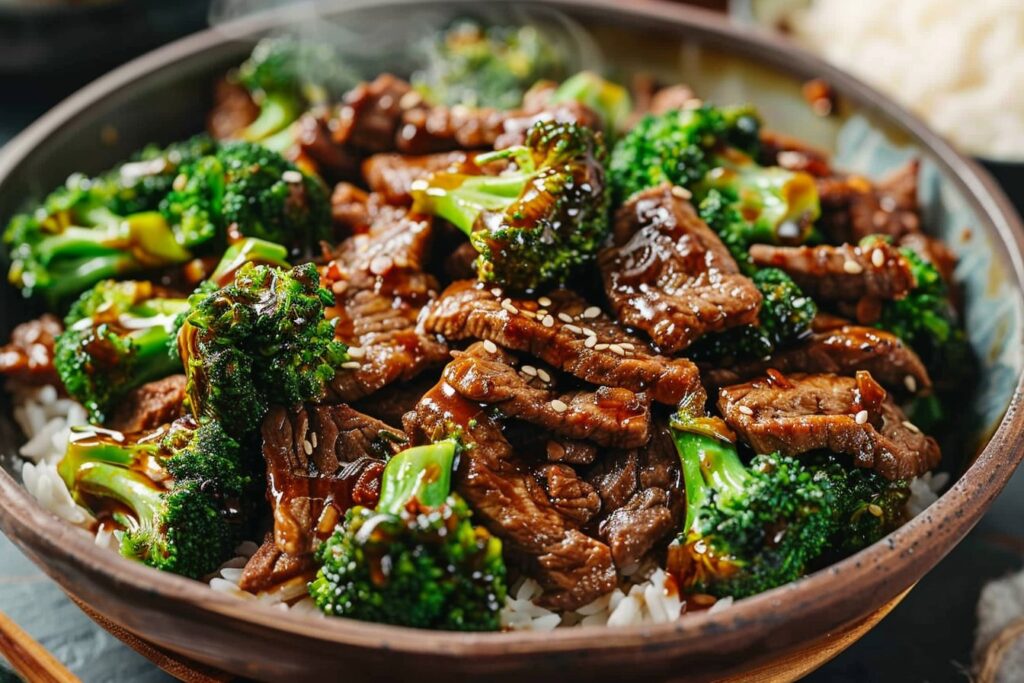
Why This One Delivers
This skillet style Chinese Beef and Broccoli (牛肉炒西兰花) leans on smart technique so you get true takeout flavor with weeknight effort. Slicing the flank steak thinly across the grain, then coating it with soy sauce, cornstarch, and a touch of baking soda, gives you that juicy, tender beef you expect from a good Chinese restaurant. A hot skillet and just enough peanut oil help the meat sear quickly, so it browns on the outside while staying soft inside instead of turning gray and chewy. Because you cook in batches, the pan never cools down, which means better flavor in the final sauce.
The broccoli stays crisp tender, not mushy, because it hits the skillet briefly and finishes in the sauce rather than boiling away in water. Chicken or beef stock, Shaoxing broth or dry sherry vinegar, soy sauce, dark soy sauce, and a little brown sugar create a glossy brown sauce that clings to every bite instead of pooling like soup. The cornstarch thickens it fast, so you can toss everything together and be at the table in minutes. If you prefer a gluten free version, swapping in tamari is simple and does not change the flavor balance.
I build the flavor in layers, starting with the sauce, then blooming the garlic and ginger in hot oil so the aromatics turn fragrant without burning. When you pour the sauce back into the skillet, it pulls up all the browned bits from the meat, which gives you that deep, savory taste you want from Chinese Beef and Broccoli (牛肉炒西兰花). The result is a skillet meal that tastes like takeout, cooks in about 30 minutes, and works just as well for a quick dinner as it does as part of a larger Chinese style spread with dishes like stir fried green beans or simple egg fried rice.
From Prep to Finish
I like to treat this Chinese Beef and Broccoli (牛肉炒西兰花) as a quick stir fry that moves in clean, simple phases. Start by slicing the flank or skirt steak against the grain into thin strips, which helps you get that tender restaurant style bite. Toss the beef with soy sauce, cornstarch, a bit of oil, and baking soda if you use it, then let it sit while you prep the broccoli and aromatics. Whisk the chicken stock, Shaoxing broth or dry sherry vinegar, soy sauce, dark soy sauce, and sugar together until the sugar and cornstarch dissolve completely. Having everything measured and within reach before you heat the skillet keeps this recipe truly 30 minutes from start to finish.
Once your prep is done, heat a large skillet until it is very hot, then swirl in oil and spread the beef in a single layer. Let it sear undisturbed for a minute before you stir; this helps the meat brown instead of steam. When the beef is almost cooked through, transfer it to a plate and add a bit more oil if the pan looks dry. Stir fry the broccoli with a splash of water until the florets are crisp tender and bright green, then add the garlic and ginger and cook just until fragrant so they stay fresh and punchy.
Return the beef to the pan with the vegetables, give the sauce a quick stir to lift any settled cornstarch, then pour it straight into the hot skillet. The sauce will look thin at first, then thicken and turn glossy in about 1 minute as you toss everything together. Taste and adjust with a splash of soy sauce or stock if needed, then take it off the heat right away to keep the broccoli crisp and the beef juicy. Serve this Chinese Beef and Broccoli (牛肉炒西兰花) over hot rice or even fried rice for a takeout style dinner that cooks faster than delivery. If you enjoy this skillet method, it also works beautifully for dishes like a simple chicken and vegetable stir fry.
Timing, Storage, and Make Ahead
Chinese Beef and Broccoli (牛肉炒西兰花) comes together fast, so it helps to have everything prepped before you turn on the heat. Slice the beef, cut the broccoli, and stir the sauce ingredients together in separate bowls first. Once you start cooking, the actual stir fry time is about 10 to 12 minutes, and the full skillet time stays close to the 15 minute mark. For crisp tender broccoli, keep your skillet hot and avoid overcrowding, or the vegetables will steam instead of sear. If you plan to serve this with rice, start the rice first so it is ready when the beef and broccoli finish.
You can absolutely make parts of this recipe ahead to save time on a busy night. Slice and marinate the beef with soy sauce, cornstarch, and baking soda up to 24 hours in advance, then keep it in an airtight container in the refrigerator. You can also cut the broccoli up to 2 days ahead and store it dry in a container lined with a paper towel to absorb extra moisture. The sauce for Chinese Beef and Broccoli (牛肉炒西兰花) can be whisked together 3 days ahead and chilled, just stir it again before using so the cornstarch fully dissolves. I sometimes batch the sauce to use in other quick skillet recipes such as a chicken and vegetable stir fry later in the week.
For storage, cool leftovers to room temperature, then refrigerate them in a shallow, sealed container for up to 3 days. The broccoli will soften slightly, but the flavors deepen, which makes this a very good next day lunch over fresh hot rice or even quinoa. Reheat gently in a skillet over medium heat with a splash of water or stock until the beef warms through and the sauce loosens again. You can microwave it if you prefer, but use short 30 second bursts and stir in between so the beef does not overcook and turn chewy. I do not recommend freezing Chinese Beef and Broccoli (牛肉炒西兰花) because the sauce can separate and the broccoli texture becomes mushy once thawed.
Ingredient Swaps and Serving Options
Chinese Beef and Broccoli (牛肉炒西兰花) is very flexible, so you can easily adjust it to what you have in your kitchen. For the beef, flank steak is ideal, but you can use skirt steak, flap meat, or thinly sliced sirloin. If you want a lighter option, try boneless skinless chicken thighs with the same marinade, just cook them an extra 2 to 3 minutes. For the sauce, regular soy sauce plus a splash of extra brown sugar can stand in for dark soy if you do not have it, and dry apple juice + apple cider vinegar or rice vinegar works well if Shaoxing broth is not available. For a gluten free version, use tamari instead of soy sauce and confirm your stock is labeled gluten free.
You can also play with the vegetables and how you serve this Chinese Beef and Broccoli (牛肉炒西兰花). Swap some of the broccoli for sliced carrots, snap peas, or baby bok choy to add more color and texture, just keep the total vegetable volume about the same so the sauce coats everything nicely. If your broccoli crown is small, bulk it up with a handful of thinly sliced onion or bell pepper. Serve the stir fry over steamed jasmine rice, brown rice, or cauliflower rice for a lower carb plate, or spoon it over cooked noodles like lo mein or rice noodles for a heartier bowl. Leftovers work very well in a packed lunch with a simple side like garlicky stir fried green beans or a quick cucumber salad to keep the meal fresh and balanced.
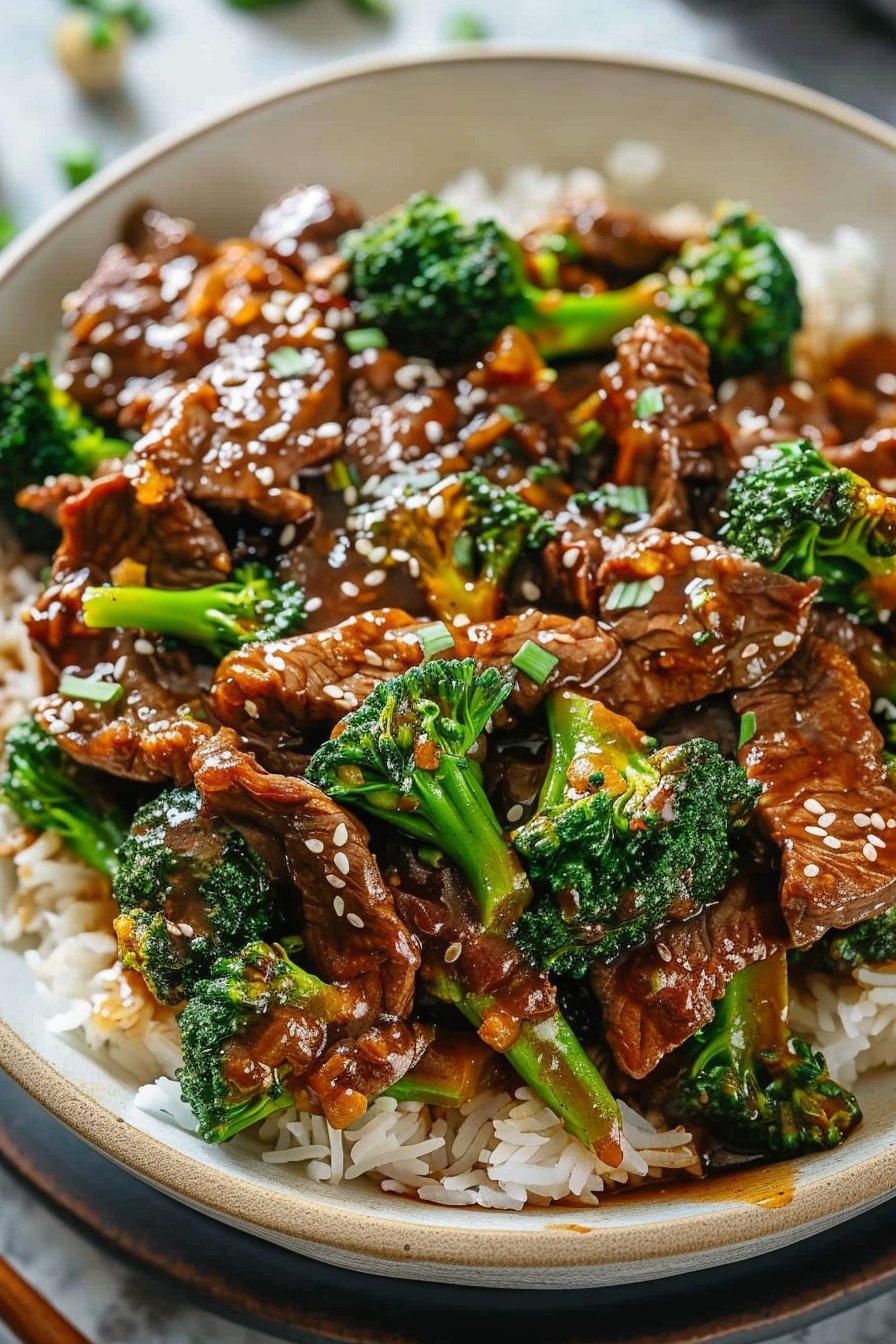
Serving Image of Chinese Beef and Broccoli (牛肉炒西兰花)
Conclusion
Chinese Beef and Broccoli (牛肉炒西兰花) is one of those dishes that quietly becomes a household favorite. It is fast enough for a busy weeknight, but still feels special when you set that skillet on the table and everyone leans in for the first bite. The savory sauce, tender beef, and bright broccoli create the kind of balance that keeps you coming back to it again and again.
I love how a simple skillet meal can bring people together, whether you are serving it family style over a pot of steamed rice or packing it into lunch bowls for the next day. Cooking at home like this gives you more control, more flavor, and those small, everyday moments when someone says, “This is really good.” That is the kind of win I want you to have often.
I hope you feel confident to try this recipe in your own kitchen. If you do, share it with someone you care about and make it part of your regular rotation. For more everyday savory recipes and practical cooking tips, follow along for more.
For more delicious recipes like this, follow us on Facebook and Pinterest!
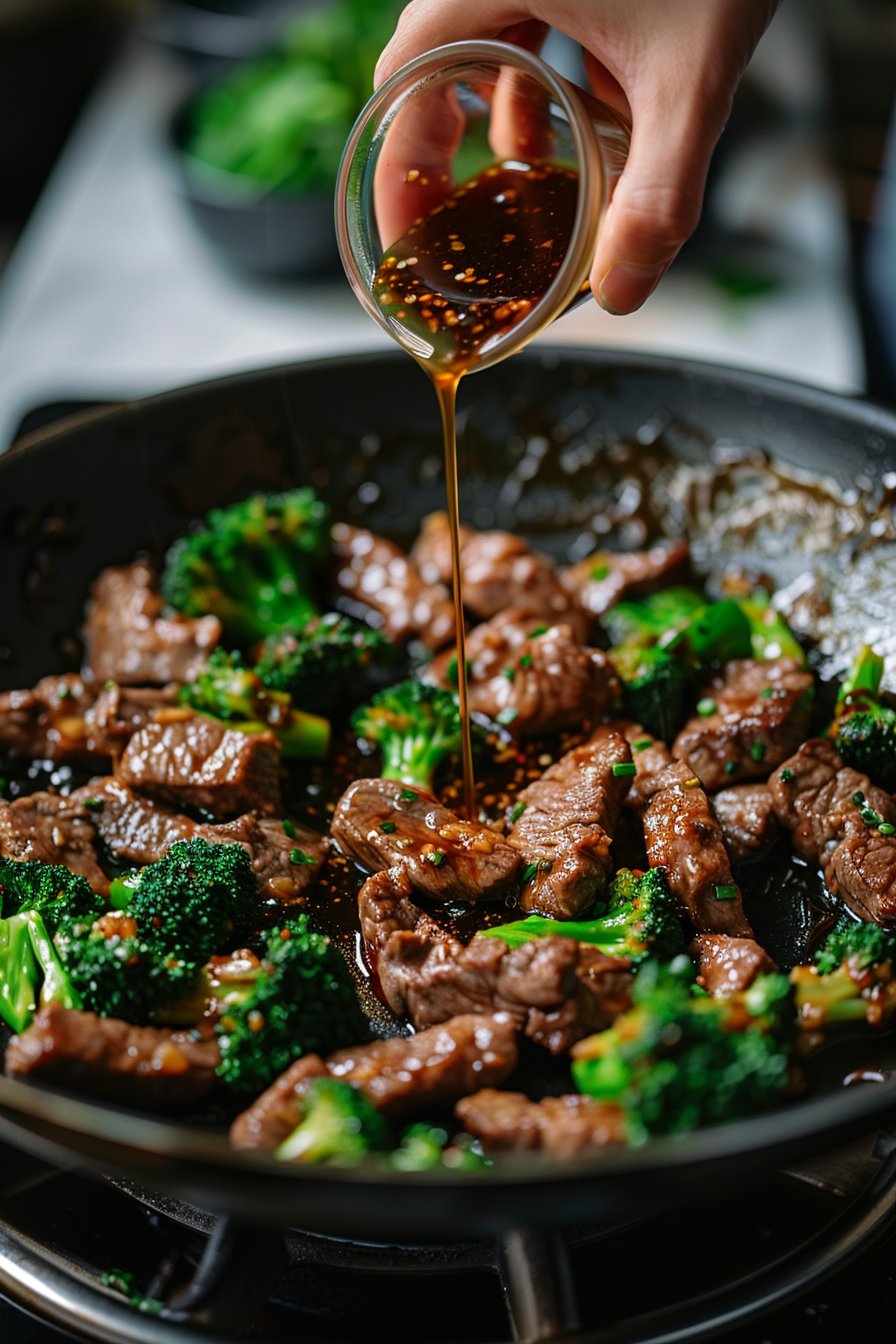
Process Image of Chinese Beef and Broccoli (牛肉炒西兰花)
Recipe
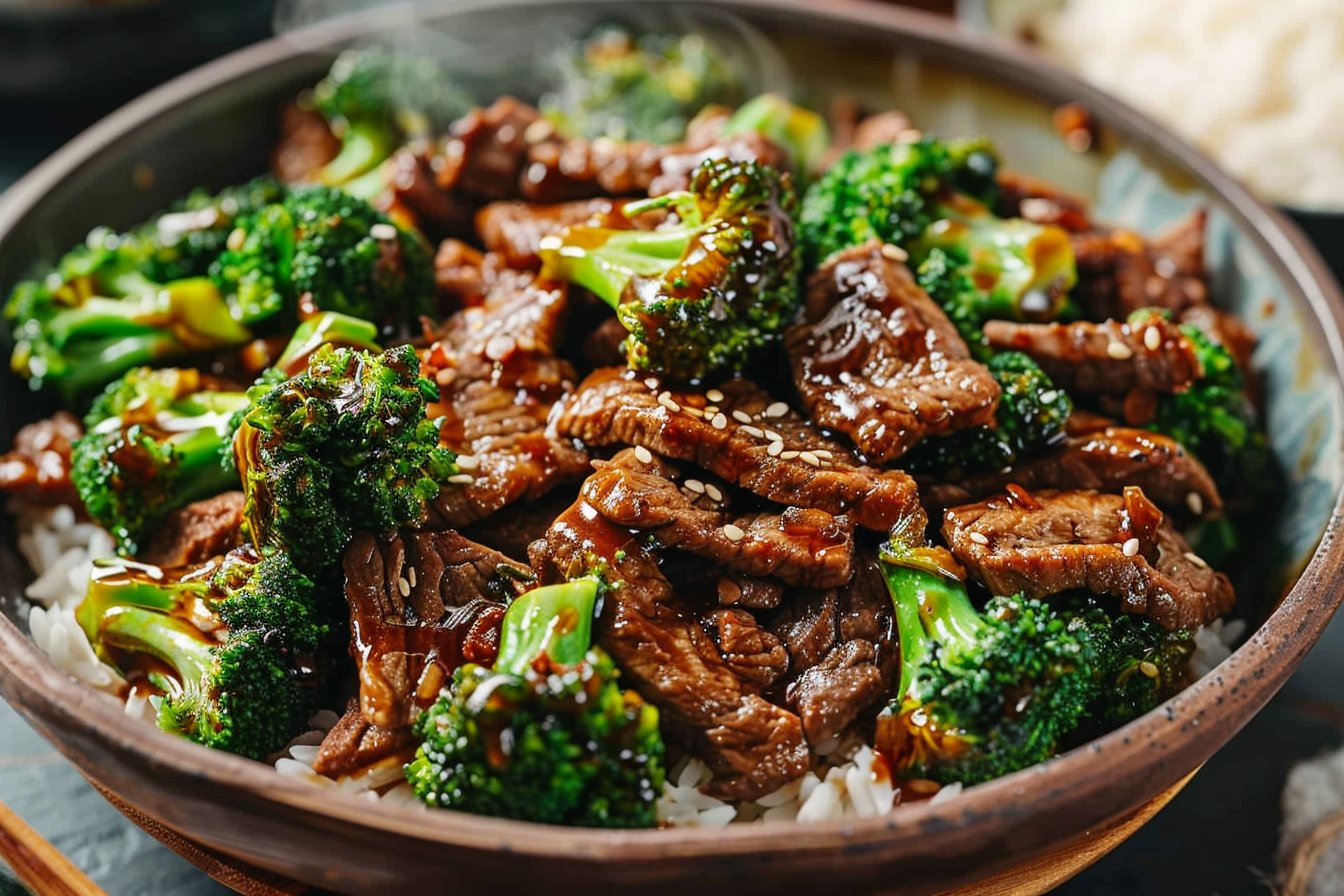
Chinese Beef and Broccoli (牛肉炒西兰花)
Ingredients
Method
- Place the sliced beef in a medium bowl and add 1 tablespoon soy sauce, 1 tablespoon peanut oil, 1 tablespoon cornstarch, and 1/2 teaspoon baking soda. Toss until the beef is evenly coated and set aside while you prepare the remaining ingredients.
- In a separate bowl, whisk together the chicken stock, Shaoxing broth, 2 tablespoons soy sauce, dark soy sauce, and brown sugar until the sugar and any remaining cornstarch in the bowl are fully dissolved. Set the sauce near the stove.
- Heat a large skillet over medium-high heat until very hot. Add 1 tablespoon peanut oil and swirl to coat the pan.
- Add the marinated beef in a single layer and let it sear undisturbed for 1 minute, then stir fry for 2 to 3 minutes until mostly cooked through with some browned edges. Transfer the beef to a plate and set aside.
- If the skillet looks dry, add a small splash of peanut oil. Add the broccoli and 2 tablespoons water, then stir fry for 3 to 4 minutes until the florets are bright green and crisp tender.
- Add the minced garlic and ginger to the skillet with the broccoli and cook, stirring constantly, for 30 seconds until fragrant.
- Return the cooked beef and any juices on the plate to the skillet and toss with the broccoli, garlic, and ginger.
- Give the sauce a quick stir, then pour it into the hot skillet. Cook, stirring and tossing constantly, for 1 to 2 minutes until the sauce boils, thickens, and coats the beef and broccoli.
- Remove the skillet from the heat immediately and serve the Chinese Beef and Broccoli hot over steamed rice or fried rice.
Notes
- Slicing the beef thinly across the grain is key for a tender bite; partially freezing the steak for 20 minutes makes it easier to slice.
- If the sauce looks too thick once it bubbles, thin it with 1 to 2 tablespoons stock; if it seems too thin, let it boil for another 30 to 60 seconds.
- Have all ingredients measured and ready before heating the skillet, because the stir fry moves very quickly once you start cooking.