A mini cake is one of the easiest ways to make dessert feel intentional without committing to slicing, layering, or babysitting a big pan. These are especially useful when you want something tidy for a small get-together, a bake sale tray, or a “I need something sweet but not a whole project” weekend bake. I’ll often pair lemon-forward desserts with a savory dinner like lemon butter salmon with crispy potatoes and broccoli—the flavors play well without feeling heavy.
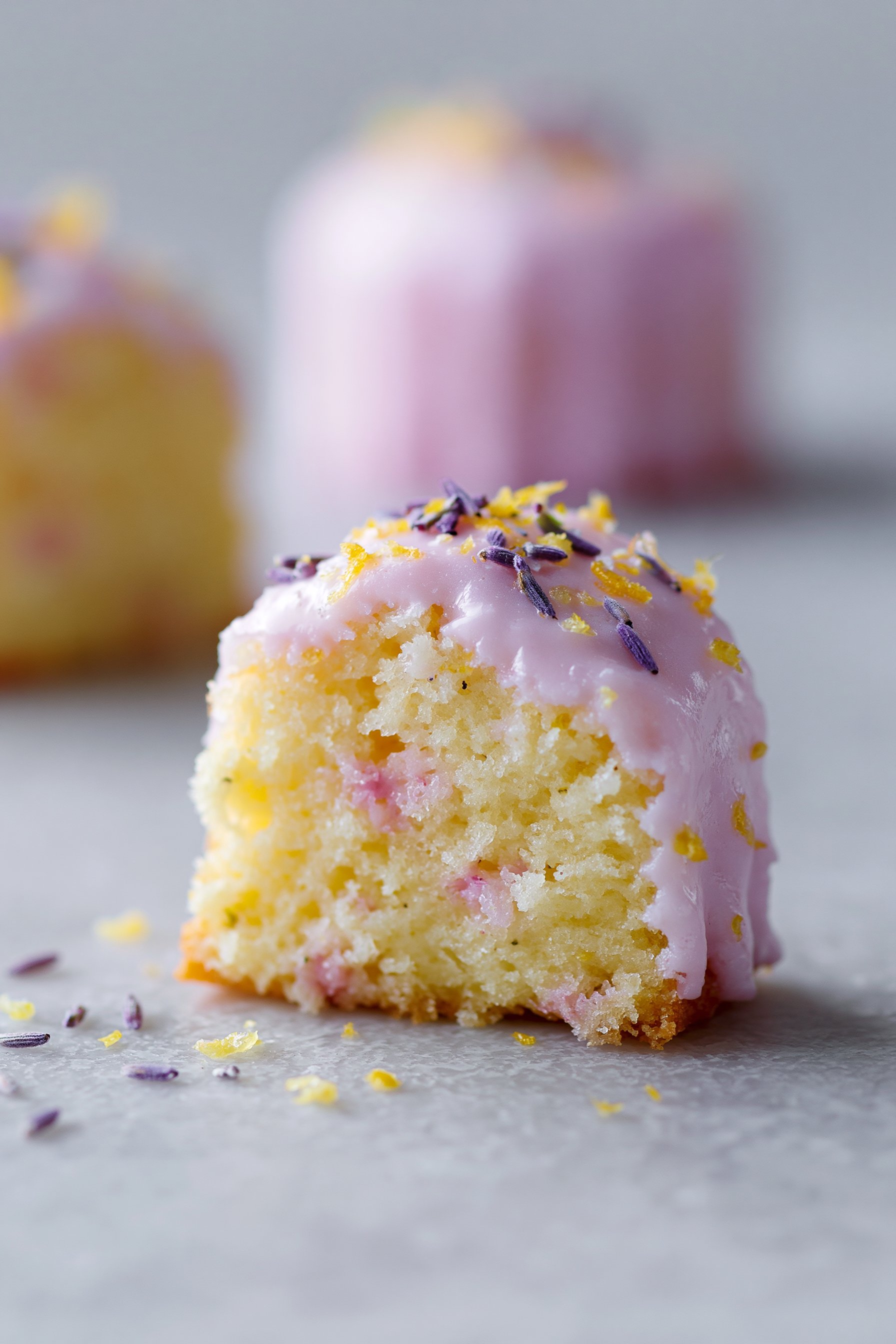
These mini lemon cakes bake up buttery and tender, with a bright lemon edge and a soft crumb from sour cream and milk. The lavender glaze is the quiet upgrade: floral but not perfumey, plus it sets into a smooth, pourable finish that looks polished with almost no extra work.
Why This Recipe Works
- Two sugars for better flavor and texture: Granulated sugar keeps the crumb light, while a little brown sugar adds moisture and a subtle caramel note that rounds out the lemon.
- Lemon zest does the heavy lifting: Using grated zest (not just juice) gives a clear citrus aroma and flavor that holds up after baking.
- Sour cream + milk = tender, not dense: The combo makes the batter smooth and the cakes soft without turning them into muffins.
- Lavender is steeped, then strained: Infusing warm milk keeps the lavender controlled and even—no crunchy bits, no “soap” taste.
- Mini molds bake evenly: Small cakes brown nicely and are easier to judge by look and touch (golden edges, springy tops).
- Clean finish with minimal fuss: A simple whisked glaze gives a bakery-style look without frosting tools or piping.
Quick Kitchen Note
Room temperature ingredients aren’t a fussy rule here—they’re the difference between a batter that blends smoothly and one that looks curdled or bakes unevenly. If you’re short on time, set the eggs, sour cream, and milk out while the oven preheats and you measure the dry ingredients.
What It Tastes Like
These taste like bright lemon shortcake in mini form: buttery and softly sweet with a clean citrus lift. The crumb is tender and fine (not airy-angelfood, not heavy-pound-cake), and the glaze brings a gentle lavender aroma that hits first, then fades into vanilla and lemon. The finish is balanced—sweet, floral, and fresh rather than sharp.
Ingredients
This recipe leans on a few key players: lemon zest for punchy citrus, sour cream for a plush crumb, and culinary lavender steeped into warm milk for a controlled floral glaze. If you don’t have mini cake molds, the batter and glaze still work the same way—just focus on the visual doneness cues (golden edges and spring-back).
- 1 1/3 cups all-purpose flour
- 1/2 tsp kosher salt
- 1/8 tsp baking soda
- 1/2 cup unsalted butter, softened
- 2/3 cup granulated sugar
- 1/3 cup packed light brown sugar
- 1 Tbsp grated lemon zest (from 2 lemons)
- 2 large eggs, at room temperature
- 1/4 cup sour cream, at room temperature
- 1/4 cup whole milk, at room temperature (for batter)
- 1 tsp vanilla extract
- 1/4 cup whole milk (for glaze)
- 1/2 tsp culinary lavender
- 1 1/2 cups powdered sugar
- 1/4 tsp kosher salt (for glaze)
- 1/8 tsp vanilla extract (for glaze)
- Edible flowers and lemon zest (for garnish)
Step-by-Step Instructions
-
Set up your baking station. Make sure the butter is softened and the eggs, sour cream, and both measures of milk are at room temperature. This helps the batter come together smooth and keeps the cakes baking evenly.
-
Preheat the oven. While it heats, get your mini cake molds ready so you can portion the batter as soon as it’s mixed.
-
Whisk the dry ingredients. In a medium bowl, whisk together the flour, kosher salt, and baking soda. You’re looking for an even mix—no streaks of baking soda.
-
Cream the butter and sugars. In a separate bowl, beat the softened butter with the granulated sugar and light brown sugar until fluffy. This should look lighter in color and feel airy rather than greasy.
-
Add the lemon zest. Mix in the grated lemon zest until it’s well distributed. The batter should smell distinctly lemony at this point.
-
Beat in the eggs. Add the eggs and beat until the mixture looks glossy and cohesive. If it looks separated at first, keep mixing—once the eggs emulsify, it should smooth out.
-
Blend in the dairy and vanilla. Mix in the sour cream, 1/4 cup milk (for the batter), and 1 tsp vanilla extract until smooth. The batter should be creamy and thick but not stiff.
-
Combine wet and dry gently. Add the dry ingredients to the wet and mix just until you don’t see dry flour. Stop as soon as it comes together; overmixing can make the cakes tough instead of tender.
-
Fill the mini cake molds. Portion the batter evenly into the molds. Aim for consistent fill levels so they bake at the same rate.
-
Bake until golden and springy. Bake until the cakes are lightly golden and the tops spring back when gently pressed. The edges should look set, not wet or pale. Let the cakes cool before glazing—warm cakes will thin the glaze and make it run.
-
Make the lavender milk. Warm 1/4 cup milk (for the glaze), add the culinary lavender, and let it steep. Strain out the lavender so the glaze is smooth and evenly flavored.
-
Whisk the glaze. In a bowl, whisk together the powdered sugar, 1/4 tsp kosher salt (for glaze), and 1/8 tsp vanilla extract (for glaze). Add the strained lavender milk gradually, whisking until the glaze is thick but pourable. It should ribbon off a spoon and settle into a smooth surface.
-
Glaze and garnish. Spoon or drizzle the glaze over cooled cakes. Finish with edible flowers and a little extra lemon zest for a clean, bright look.
Common Mistakes to Avoid
- Using cold eggs or dairy: Cold ingredients can make the batter look curdled and bake unevenly. Fix: Bring eggs, sour cream, and milk to room temperature before starting.
- Overmixing after adding flour: This can tighten the crumb and make the cakes bready. Fix: Mix just until the flour disappears.
- Glazing while cakes are warm: The glaze will melt, turn thin, and slide off. Fix: Cool completely before glazing.
- Over-steeping the lavender: Too long can push the flavor from floral to bitter/perfumey. Fix: Steep just until the milk smells pleasantly fragrant, then strain.
- Glaze consistency off: Too thick won’t pour; too thin won’t coat. Fix: Add lavender milk gradually until it’s “thick but pourable.”
Variations and Swaps
- Skip the flowers: Keep the garnish simple with lemon zest only; it still looks intentional and highlights the citrus.
- Adjust the lavender strength: Use a lighter hand by steeping briefly for a subtle floral note, or steep a bit longer for a more pronounced aroma—taste the infused milk before mixing the glaze.
- Glaze style change: For a more opaque look, keep the glaze on the thicker side so it settles into a defined layer on top rather than dripping down.
Serving Suggestions
- Serve with coffee or black tea—the lavender and lemon read clean and not overly sweet.
- If you’re planning a lemon-forward menu, this is a nice finish after something like lemon garlic butter shrimp with asparagus.
- For a dessert table with options, pair these mini cakes with chilled slices of no-bake lemon pie with almond flour crust so guests can choose something glazed and something creamy.
Storage and Meal Prep
Once glazed, store the cakes in a single layer so the tops stay neat. If you need to stack, place a sheet of parchment between layers to protect the glaze. For best texture, glaze the day you plan to serve; the cakes hold up well on their own, and the glaze stays smooth when it’s freshly set. If you’re making them ahead, bake and cool the cakes first, then glaze closer to serving so the finish stays clean.

FAQs
Can I make the cakes ahead and glaze later?
Yes. Bake and cool the cakes, then glaze closer to serving for the smoothest finish.
How do I know the mini cakes are done without overbaking?
Look for lightly golden color and a top that springs back when gently pressed. The edges should look set, not pale or wet.
My glaze is too thick—what should I do?
Whisk in a small splash more of the strained lavender milk until it becomes thick but pourable.
My batter looks a little separated after adding eggs—did I ruin it?
Usually no. Keep beating until it turns glossy and cohesive; room temperature ingredients help it come together.
Final Tip
Zest your lemons directly over the sugar bowl before you start mixing—those fragrant oils land right where they’ll be mixed in thoroughly, and the lemon flavor comes through even after the cakes cool.
Conclusion
If you want to compare a few approaches to lemon-and-lavender desserts (and see how other bakers handle the glaze), it’s useful to read a couple different versions: Southern Living’s Mini Lemon Cakes With Lavender Glaze, the citrus-forward take in Citrus Cake with a Lemon-Lavender Glaze, and the cupcake format from Lemon Lavender Cupcakes. The core idea is the same: keep the lemon bright, keep the lavender controlled, and let the crumb stay tender by mixing gently and glazing only after the cakes are fully cool.
Mini Lemon Cakes with Lavender Glaze
Ingredients
Method
- Set up your baking station. Make sure the butter is softened, and the eggs, sour cream, and both measures of milk are at room temperature.
- Preheat the oven and prepare your mini cake molds.
- Whisk together the flour, kosher salt, and baking soda in a medium bowl.
- In a separate bowl, cream the softened butter with granulated and brown sugar until fluffy.
- Mix in the grated lemon zest until well distributed.
- Beat in the eggs until the mixture is glossy.
- Blend in the sour cream, 1/4 cup milk, and vanilla extract until smooth.
- Combine wet and dry ingredients gently until just mixed.
- Portion the batter into the molds and bake until golden and springy. Let cool before glazing.
- Warm 1/4 cup milk for the glaze, add the culinary lavender, and let it steep. Strain out the lavender.
- In a bowl, whisk together powdered sugar, kosher salt, and vanilla extract. Gradually add the strained lavender milk until the glaze is thick but pourable.
- Spoon or drizzle the glaze over cooled cakes and garnish with edible flowers and lemon zest.