
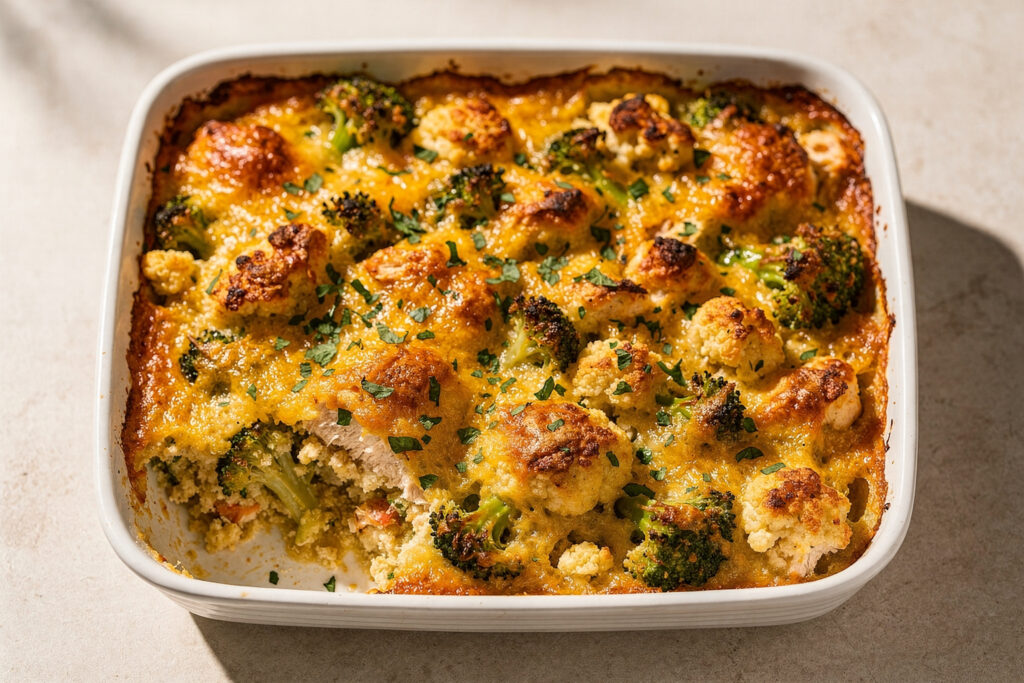
Why This One Delivers
I built this collection of 40 Must-Try Low-Carb and Easy Casseroles for Diabetics around everyday realities, not wishful thinking. Every casserole in this list leans on clear structure: lower impact carbs, higher protein, and plenty of fiber from nonstarchy vegetables. That lets you enjoy familiar comfort foods like cheesy bakes and hearty chicken dishes while keeping more predictable blood sugar responses. Most options come together with quick prep, simple layering, and one pan, so you can get a full main course in the oven in about 15 minutes. If a recipe looks creamy or indulgent, you will see exactly where the carbs are trimmed and how portions stay realistic.
What makes these casseroles work nutritionally is the way they swap, not just shrink. Instead of a full pan of pasta, rice, or potatoes, you will see practical base swaps such as cauliflower rice, zucchini, and extra vegetables, with clear portion cues so you are not guessing. Recipes also favor unsweetened sauces, clean seasoning, and flavorful cheeses, and they rely on oven browning to build flavor rather than sugar or heavy thickeners. I kept the ingredient lists streamlined so you can use pantry staples or simple upgrades you may already buy for dinners or diabetes friendly snacks. The result is a set of low carb casseroles that are easy to put on your weekly rotation, feel satisfying at 300 calories a serving, and support steadier energy long after you finish your plate.
From Prep to Finish
For these 40 Must-Try Low-Carb and Easy Casseroles for Diabetics, I like to think in three simple phases. First, prep your lower carb base. That might be cauliflower rice, sliced zucchini, or a small portion of whole grain pasta kept to about ½ cup cooked per serving if you choose to use it. While your oven preheats to 190 °C, 375 °F, quickly chop any vegetables and lean proteins so everything cooks at the same rate and you avoid soggy edges with undercooked centers. If you are used to starch heavy casseroles, remember you are flipping the ratio. Load the pan with non starchy vegetables and protein, then use carbs as accents instead of the bulk.

Process Image of 40 Must-Try Low-Carb and Easy Casseroles for Diabetics
Next, build flavor without added sugar. Whisk together unsweetened sauces such as plain tomato sauce, cream, or broth with herbs, spices, garlic, and a bit of cheese rather than bottled sauces that can hide extra carbs. Pour this evenly over your base and mix gently so every bite feels creamy but not soupy. A standard 20 minute bake works for most of these low carb and easy casseroles, but start checking at 15 minutes for bubbling edges, a lightly golden top, and a center that no longer looks wet. If you insert a spoon and the casserole feels loose, give it another 3 to 5 minutes. Let it rest for at least 5 minutes after baking so the structure sets and slices hold together, which is especially helpful if you are pairing this with other diabetic friendly meals from your weekly rotation.
Timing, Storage, and Make-Ahead
Most of the casseroles in 40 Must-Try Low-Carb and Easy Casseroles for Diabetics cook in about 20 to 30 minutes, which keeps weeknight timing realistic and blood sugar more predictable. As a general guide, plan 15 minutes for prep and 20 to 30 minutes for baking, until the edges bubble and the center is hot and set. If you start with cold ingredients from the fridge, add 5 to 10 minutes to the bake time, and tent with foil if the top browns before the center is fully heated. For best texture, let the casserole rest for 5 to 10 minutes before serving, so the sauce can thicken and portions cut cleanly instead of sliding apart.
For storage, cool the casserole until just warm, then transfer it to shallow containers and refrigerate within 2 hours to keep it safe and fresh. Most low carb casseroles keep well in the fridge for 3 to 4 days, especially those built on vegetables, eggs, chicken, or ground turkey. Avoid leaving any casserole at room temperature all evening, even if the portion looks small. If you track carbs closely, label containers with both the date and number of servings, so your portions stay consistent.
To make casseroles ahead from 40 Must-Try Low-Carb and Easy Casseroles for Diabetics, you have two options. You can assemble the dish, cover it tightly, and refrigerate it for up to 24 hours before baking. In this case, place the cold casserole in the oven as it preheats and extend the cook time by 10 to 15 minutes. You can also fully bake, cool, and freeze most of these casseroles for 2 to 3 months, especially those with cauliflower rice or high protein fillings rather than pasta. Reheat covered in the oven at 175 °C until hot in the center, or in smaller microwaved portions for quick lunches from recipes like 36 Easy Work Lunch Ideas. If the sauce looks slightly watery after reheating, give it a good stir and a few minutes to settle, it often thickens back up as it cools.
Ingredient Swaps and Serving Options

Serving Image of 40 Must-Try Low-Carb and Easy Casseroles for Diabetics
For these 40 Must-Try Low-Carb and Easy Casseroles for Diabetics, the smartest move is to start with the base. Trade classic pasta, white rice, and potatoes for cauliflower rice, spiralized zucchini, shredded cabbage, or riced broccoli. You can still keep a small amount of higher carb ingredients for texture, such as ½ cup cooked whole grain pasta or brown rice per serving, then stretch the dish with extra nonstarchy vegetables. Swap sugary jarred sauces for unsweetened tomato sauce, plain Greek yogurt, or canned tomatoes with herbs. Use full fat or reduced fat cheese in modest amounts for flavor, and lean proteins like chicken, turkey, tofu, or beans to keep the casserole filling without spiking blood sugar. If a recipe calls for a sweet topping, try crushed nuts, grated parmesan, or almond flour crumbs instead of breadcrumbs.
Serving style matters just as much as the ingredient swaps. Keep portions controlled by pairing your casserole with a big side salad, simple sautéed greens, or roasted low carb vegetables, so your plate is balanced without feeling skimpy. Most of the 40 Must-Try Low-Carb and Easy Casseroles for Diabetics work well as meal prep, so portion cooled casseroles into single serving containers for quick lunches or dinners. If a casserole feels heavier, serve it in a smaller ramekin and add a fresh side, similar to how you might balance one of my easy and healthy dinner ideas. For a brunch friendly option, cut egg based casseroles into small squares and serve with a vegetable platter for built in portion control. However you serve them, aim for half your plate from vegetables, a palm sized serving of protein, and the rest from any higher carb ingredients you choose to keep.
Conclusion
When you look at a pan of bubbly casserole coming out of the oven, it never feels like “diet food.” It feels like real comfort that you can share with the people you love. That is why I put together this collection of 40 Must-Try Low-Carb and Easy Casseroles for Diabetics: so you can sit down to food that supports your health and still makes the table feel generous, satisfying, and relaxed.
Casseroles have a special way of slowing everyone down for a moment. You pass the dish, scoop out a portion, and suddenly conversation gets easier. Whether you are cooking for yourself, a partner who just found out they have diabetes, or a busy family with mixed dietary needs, these casseroles help you focus on enjoying dinner instead of worrying about every bite.
I hope you will pick one of these recipes, preheat your oven, and just start. Try one this week, notice how you feel afterward, and then come back for another. Bit by bit, you will build a lineup of go to dinners that are truly on your side.
For more delicious recipes like this, follow us on Facebook and Pinterest!