
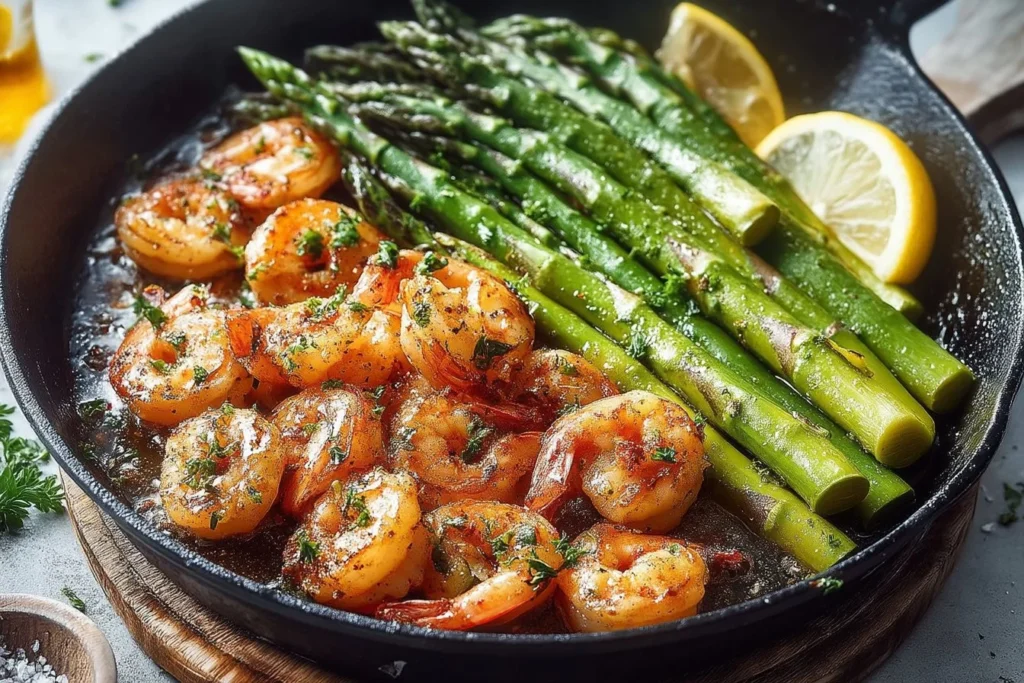
A fast skillet dinner is only as good as its timing—and this one is built around it. Lemon garlic butter shrimp with asparagus comes together in one pan, with a sauce that forms right in the skillet: melted butter, briefly sautéed garlic, and a squeeze of lemon to pull everything into focus.
It’s especially useful on nights when you want something that feels fresh but still satisfying. The shrimp cook in minutes, the asparagus stays crisp-tender, and you’re not left with extra bowls or a sink full of tools. If you like bright, savory flavors, this hits the mark without overcomplicating dinner. (If you’re in a lemon-garlic groove lately, I also keep this creamy lemon garlic salmon in the same rotation.)
Why This Recipe Works
- One-pan sauce, no extra steps: The butter, garlic, and lemon juice become a glossy coating right in the skillet—nothing to reduce separately.
- Quick-cooking proteins + vegetables: Shrimp and asparagus finish in the same window, so dinner lands on the table before anything turns rubbery or mushy.
- Texture contrast you can actually control: Shrimp are done when pink and opaque; asparagus is done when bright green and still crisp, not limp.
- Garlic stays aromatic (not bitter): A short sauté in butter—about a minute—gives you fragrance without scorching.
- Easy to scale up or down: The method stays the same whether you’re cooking for one or feeding a small group; just keep an eye on the pan so shrimp aren’t overcrowded.
- Clean finish: Lemon juice cuts the richness of butter so the dish tastes lively rather than heavy.
Quick Kitchen Note
I rely on this style of recipe when I want something that tastes “cooked” (real sautéed garlic, a proper buttery pan sauce) but still feels light and direct—no marinating, no breading, no bake time, and minimal cleanup.
What It Tastes Like
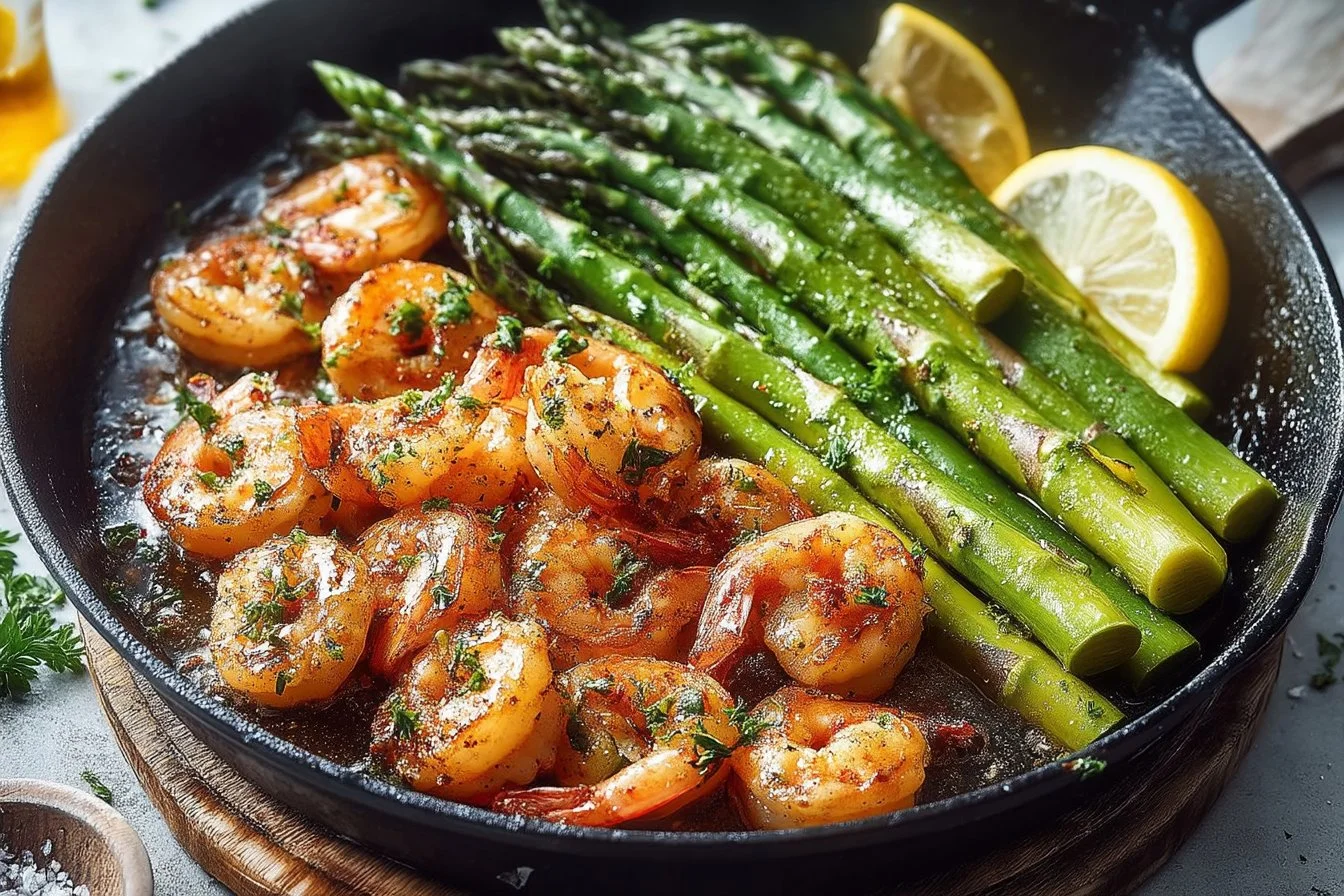
This skillet tastes bright and savory: buttery garlic up front, a clean lemon finish, and that sweet shrimp flavor that comes through best when it’s cooked just until opaque. The asparagus adds a fresh, slightly grassy crunch, and the parsley at the end gives the whole pan a lifted, herby aroma.
Ingredients
This recipe is built on a short list: butter for richness and a silky coating, garlic for savory depth, and lemon juice to brighten everything right at the end. Shrimp cook quickly and stay tender if you stop as soon as they turn pink, while asparagus holds up well in the same pan. If you don’t have parsley, you can still serve it as-is—the core flavors are in the butter, garlic, and lemon.
- 1 pound shrimp, peeled and deveined
- 1 bunch asparagus, trimmed
- 4 tablespoons butter
- 4 cloves garlic, minced
- Juice of 1 lemon
- Salt and pepper to taste
- Chopped parsley for garnish
Step-by-Step Instructions
- Melt the butter. Set a large skillet over medium heat and add the butter. Let it melt completely and start to look glossy across the pan.
- Sauté the garlic briefly. Add the minced garlic and cook for about 1 minute, stirring, until it smells fragrant. (If it starts to brown quickly, lower the heat—garlic can turn bitter fast.)
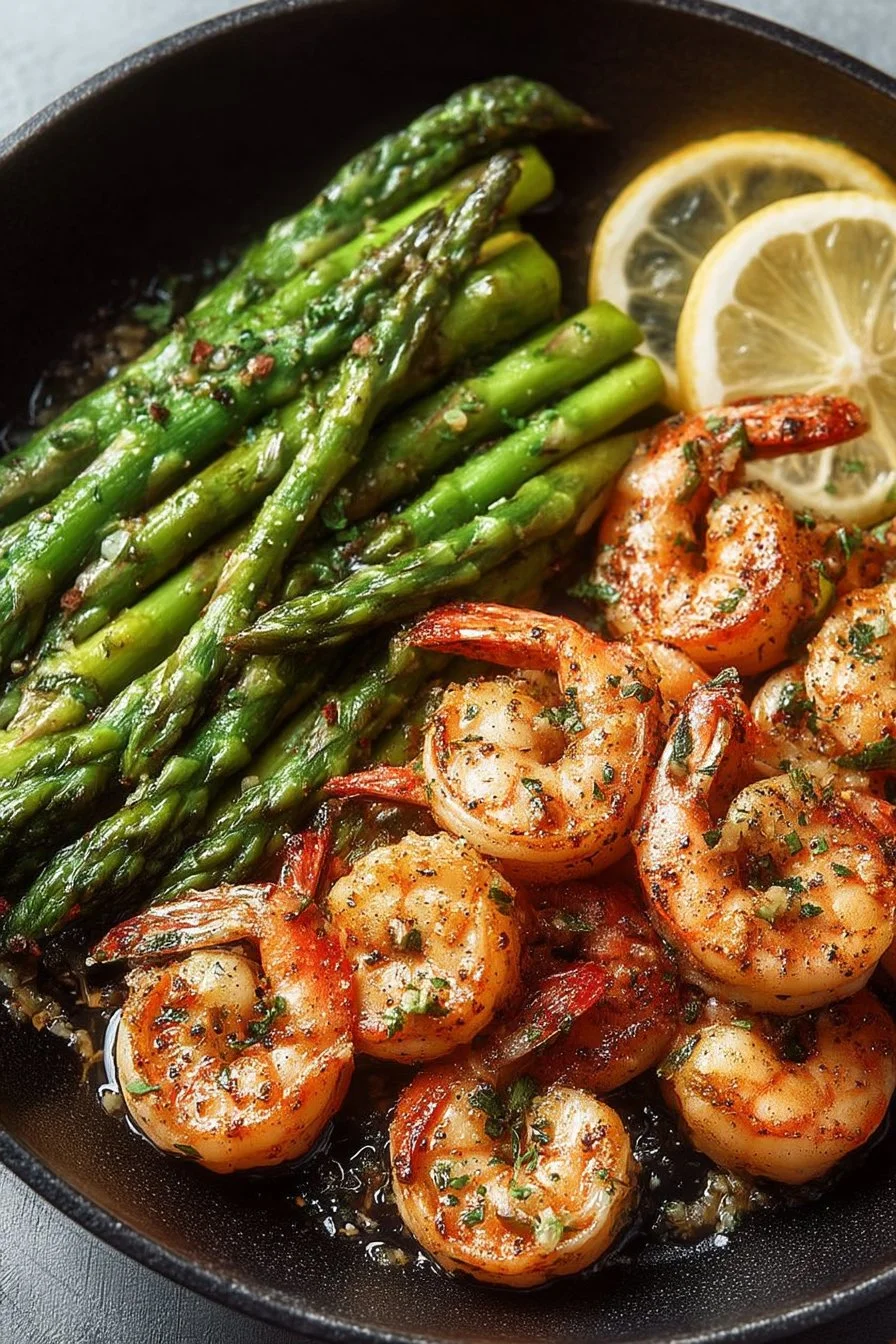
- Cook the shrimp. Add the shrimp and season with salt and pepper. Cook for 2–3 minutes, stirring or flipping as needed, until the shrimp turn pink and opaque. They should look curled but not tightly coiled.
- Add asparagus + lemon. Add the trimmed asparagus to the skillet. Squeeze the juice of 1 lemon over everything, letting it hit the hot pan and the shrimp.
- Finish until crisp-tender. Cook for 4–5 minutes, tossing occasionally, until the asparagus is bright green and tender but still crisp. The shrimp should be fully opaque; stop cooking as soon as they are—overcooking is what makes them tough.
- Garnish and serve. Serve immediately and finish with chopped parsley.
Common Mistakes to Avoid
- Overcooking the shrimp: Shrimp go from tender to rubbery quickly. Fix: pull back the heat once they’re pink and opaque; they’ll stay warm while asparagus finishes.
- Letting the garlic brown too much: Burnt garlic makes the whole pan taste harsh. Fix: keep it to about a minute on medium heat and stir; lower the heat if needed.
- Cooking asparagus until dull or limp: Asparagus should be bright and crisp-tender here. Fix: stop at “fork-tender with resistance,” not soft.
- Under-seasoning the pan: Butter and lemon need enough salt to taste balanced. Fix: season the shrimp well, then taste the final pan and adjust with a pinch more salt and pepper.
Variations and Swaps
- More lemon or less: Keep the base the same, but adjust the lemon juice to your preference—just add a little at a time if you’re sensitive to acidity.
- Asparagus size matters: Thicker stalks may need the full cooking time; thin asparagus cooks faster. If yours is very thin, add it a little later so it stays crisp.
- Butter level: The butter is the sauce. If you prefer it lighter, use a bit less—but expect a thinner coating in the pan.
Serving Suggestions
- Spoon the shrimp, asparagus, and buttery lemon pan juices over a simple bowl of rice or grains to catch every bit of sauce.
- Serve with a crisp green salad for contrast—this dish already has richness from the butter, so fresh greens balance it well.
- Add something lemony afterward if you’re planning a full menu; I like keeping dessert minimal, like this no-bake lemon pie with coconut cream or the almond-crust lemon pie when I want a clean finish.
Storage and Meal Prep
This is best right off the stove, but leftovers are still workable if you reheat carefully. Store in an airtight container in the fridge and plan to use within a day or two for the best texture. Reheat gently in a skillet over low heat just until warmed through—shrimp get tough if they’re blasted with high heat. If you’re prepping, trim the asparagus and mince the garlic ahead of time so the cooking stays truly quick.
FAQs
Can I cook the asparagus first, then add shrimp?
You can, but this recipe is designed so shrimp cook first and don’t sit in the pan too long afterward. If your asparagus is very thick, you can add it promptly after the shrimp start turning pink so it still finishes crisp-tender.
How do I know shrimp are done without overcooking them?
Look for pink edges and opaque centers. As soon as they lose the gray, translucent look, they’re done—don’t wait for them to shrink tightly into little rings.
My garlic tasted sharp—what happened?
It likely cooked too hot or too long. Keep it to about a minute over medium heat, and stir so it doesn’t brown in one spot.
Can I make it ahead for lunches?
You can, but expect slightly softer asparagus and firmer shrimp after reheating. For better results, reheat slowly and stop as soon as it’s warm.
Final Tip
Before you start cooking, have the shrimp seasoned and the asparagus trimmed—once the butter melts and garlic hits the pan, everything moves fast. That simple prep step is what keeps the shrimp tender and the asparagus crisp-tender instead of overcooked.
Conclusion
If you want to compare approaches to this same flavor combo, it’s interesting to see how different cooks handle the timing and format—this version stays stovetop and direct, while others go a bit differently, like Lemon Garlic Butter Shrimp with Asparagus, Lemon Garlic Shrimp and Asparagus, or a hands-off bake like Sheet Pan Lemon Garlic Shrimp and Asparagus. If you’re tightening up weekday routines overall, I also keep a simple structure like this 14-day no-sugar beginner plan bookmarked for meal-planning ideas (even when I’m not following it strictly).
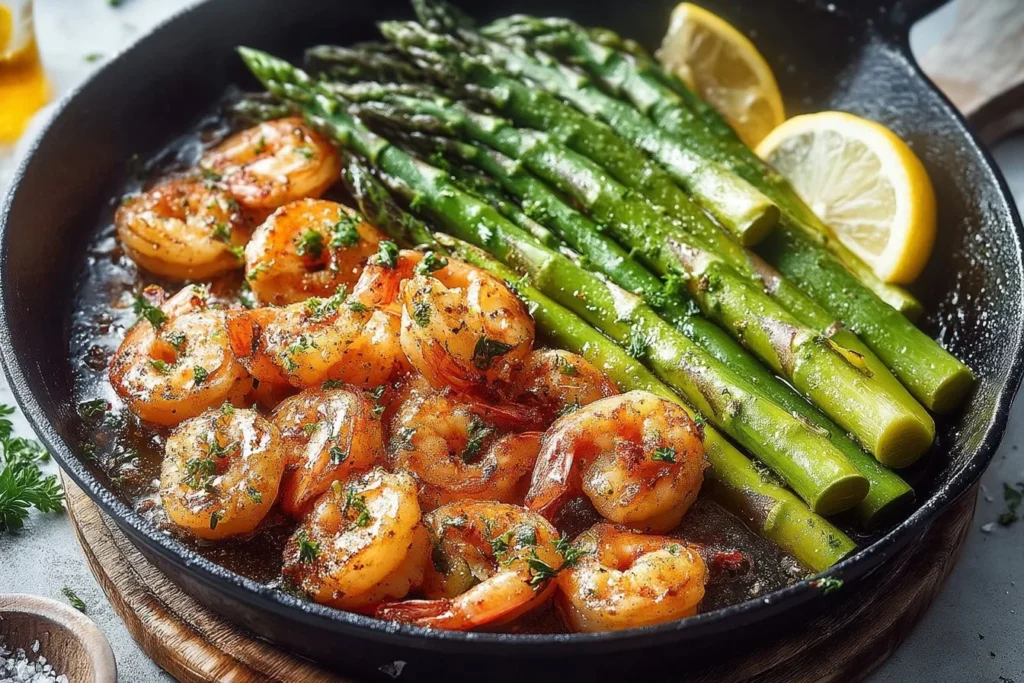
Lemon Garlic Butter Shrimp with Asparagus
Ingredients
Method
- Melt the butter in a large skillet over medium heat until it becomes glossy.
- Add the minced garlic and sauté for about 1 minute, stirring constantly to avoid browning.
- Add the shrimp to the skillet, seasoning with salt and pepper. Cook for 2-3 minutes, stirring occasionally, until the shrimp turn pink and opaque.
- Add the asparagus to the skillet and squeeze the juice of 1 lemon over everything, ensuring it hits the hot surface.
- Cook for an additional 4-5 minutes, tossing occasionally, until the asparagus is bright green and crisp-tender and the shrimp are fully opaque.
- Serve immediately, garnished with chopped parsley.