When I need a dessert that feels bright and put-together without turning my kitchen into a flour storm, I make this lemon cake. It’s an 8×8 situation—mix in one bowl, bake, cool, frost, done. It’s also a great “bring something” option because it slices cleanly and holds up well in the fridge.
The payoff is in the texture: tender and moist from Greek yogurt, with a gentle crumb from almond flour and a little structure from oat flour. The lemon comes through clearly (zest + juice), and the cream cheese frosting turns it into an actual cake—not a muffin pretending to be one. If you’ve enjoyed my moist lemon yogurt cake or keep Greek yogurt around for baking, this is the easy square-pan version I reach for.
Why This Recipe Works
- Almond flour + oat flour balance: almond flour keeps the cake moist and tender, while a small amount of oat flour helps it set with a more cake-like crumb.
- Greek yogurt does double duty: it adds moisture and a slight tang that makes the lemon taste brighter without needing extra sugar.
- Maple syrup sweetens smoothly: it blends right into the batter (no creaming step) and keeps the sweetness mellow and clean.
- One-bowl batter, minimal cleanup: whisk dry, whisk wet in the same bowl, then straight into the lined pan.
- Built-in doneness cues: you’re looking for a golden top and a clean toothpick—simple, reliable checks.
- Make-ahead friendly: it stores well frosted in the fridge for several days, so you can bake it when you have time and serve later.
Quick Kitchen Note
I rely on this cake when I want something that slices neatly for snacking through the week—especially alongside a meal-prep lunch. If you’re already baking with Greek yogurt (like in my peanut butter Greek yogurt cookies), this batter will feel familiar and forgiving.
What It Tastes Like
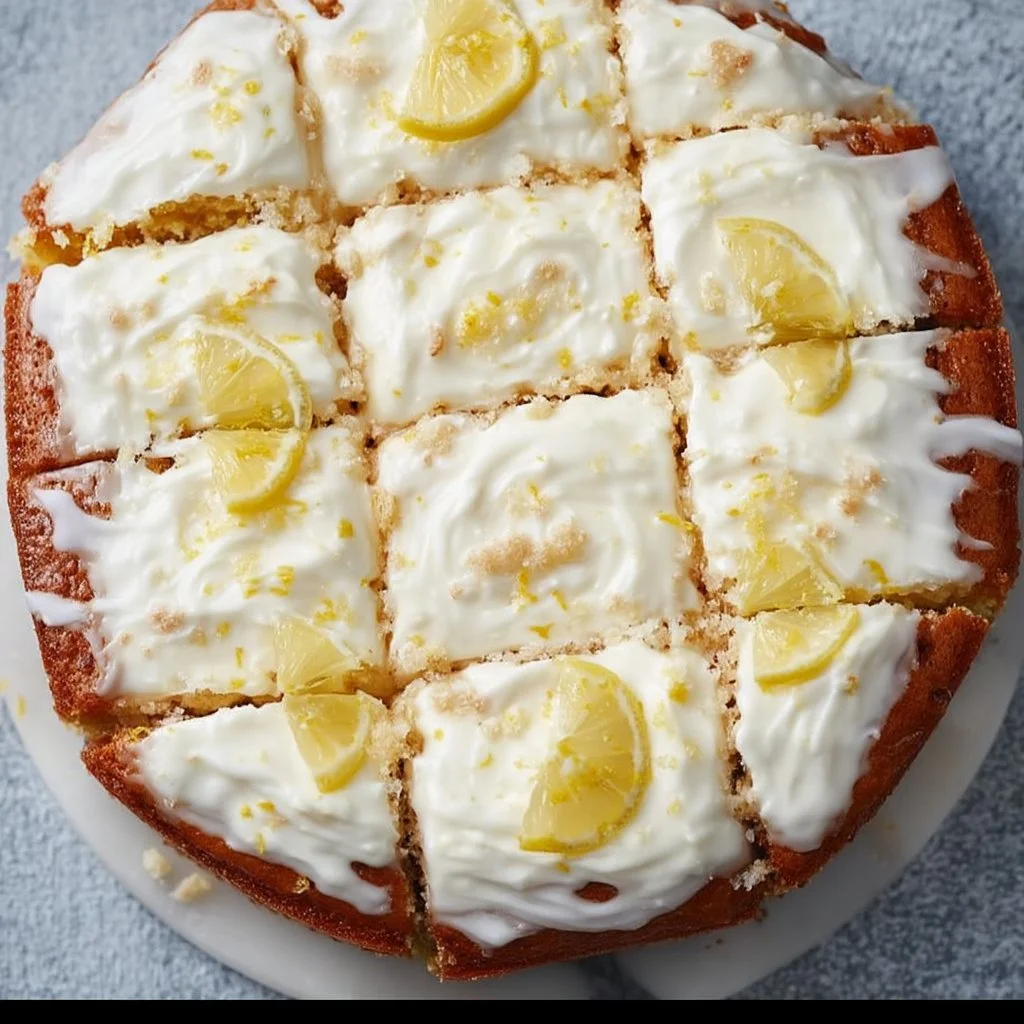
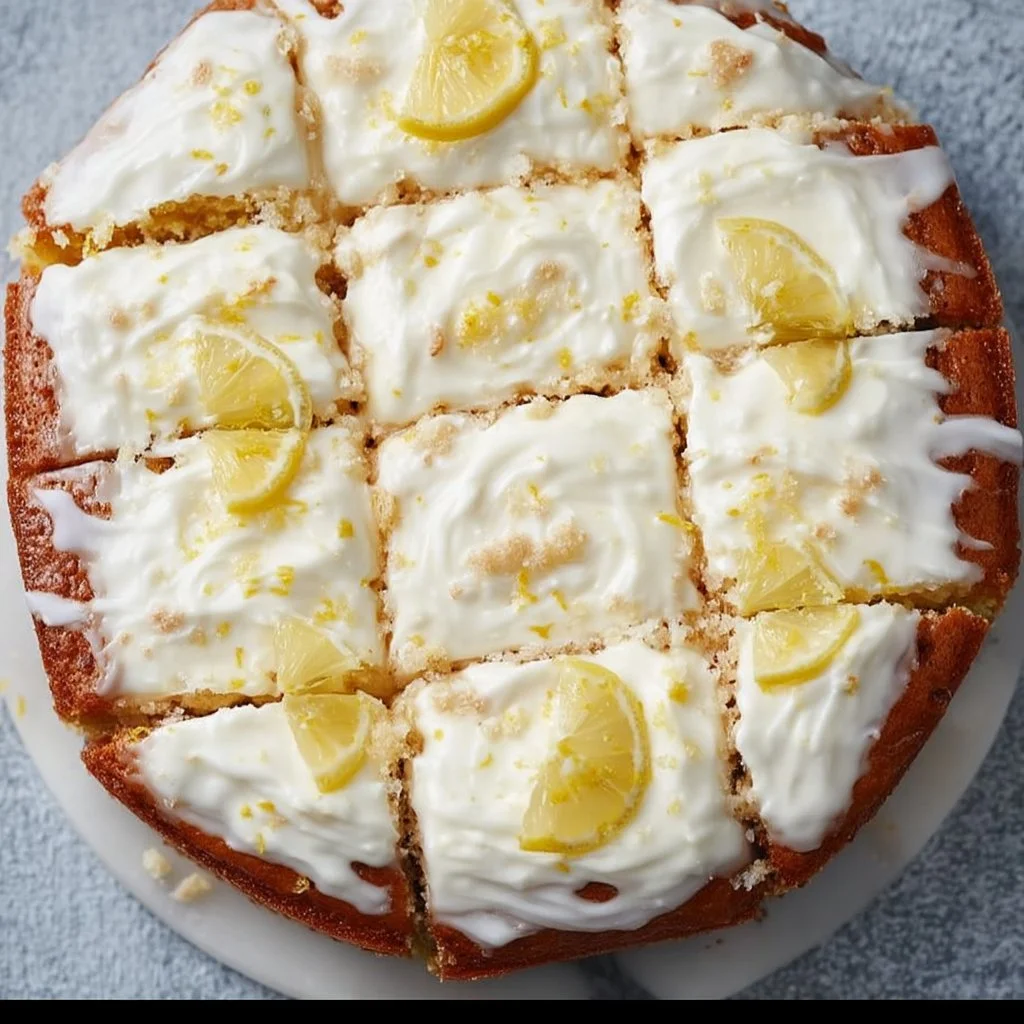
This cake is lemon-forward but not sharp: the zest gives it that fragrant citrus aroma, and the juice adds a clean, bright finish. The crumb is moist and tender (thanks to almond flour and yogurt), with a lightly golden top. Frosted with lemon cream cheese frosting, it lands in a balanced place—rich on top, fresh and light in the bite.
Ingredients
Almond flour is the base here, so use super fine blanched almond flour for the most even, cake-like texture. Greek yogurt keeps the crumb moist, and the lemon zest is non-negotiable for real lemon flavor. If your batter seems thinner than expected, you can tighten it with a spoonful or two of almond flour (more on that in the steps).
- 2 cups super fine blanched almond flour, packed (268g)*
- 1/3 cup oat flour (36g)
- 1/2 tsp baking soda
- 1/2 tsp baking powder
- 1/4 tsp fine sea salt
- 1/2 cup plain Greek yogurt
- 1/2 cup pure maple syrup
- 1 large lemon, zested and juiced (3 tbsp lemon juice)**
- 3 large eggs
- 2 tbsp extra virgin olive oil
- 1 1/2 tsp vanilla extract
- healthy lemon cream cheese frosting

Step-by-Step Instructions
- Preheat and prep the frosting base. Heat the oven to 350°F. If your frosting uses a brick of cream cheese, unwrap it and set it on a plate near the warming oven so it can soften (doing this about an hour ahead helps it mix smoothly later). Line an 8×8-inch baking dish with parchment paper.
- Whisk the dry ingredients. In a medium or large mixing bowl, add the almond flour, oat flour, baking soda, baking powder, and salt. Whisk well so there are no streaks—almond flour can clump, so take an extra 20 seconds here.
- Add the wet ingredients and whisk until smooth. Add the Greek yogurt, maple syrup, lemon juice, lemon zest, eggs, olive oil, and vanilla. Whisk until the batter is smooth and cohesive.
- You’re aiming for slightly thick but pourable—it should fall off the whisk in a ribbon and settle back into the bowl.
- If it looks too runny, whisk in 2–4 tablespoons more almond flour to bring it back to that thicker, cake-batter consistency.
- Pan and level. Pour the batter into the lined dish. Use a rubber spatula to smooth the top into an even layer, especially into the corners (this helps it bake evenly).
- Bake. Bake for about 35 minutes, until the top is golden and a toothpick inserted in the center comes out clean. If the center looks set but the toothpick has wet batter, give it a few more minutes and check again.
- Cool properly. Let the cake cool on a wire rack. This prevents steam from turning the bottom soggy. Once it’s no longer hot, I like to pop it in the fridge so it cools faster and frosts more cleanly.
- Make the frosting while it bakes/cools. Prepare your healthy lemon cream cheese frosting while the cake is in the oven or as it cools, so everything is ready when you want to finish it.
- Frost, slice, and store. Frost the cooled cake. Slice into 12–16 pieces (12 for larger squares, 16 for snackier ones). Store covered in the refrigerator.
Common Mistakes to Avoid
- Skipping parchment paper: almond-flour cakes can stick more than you expect. Fix: line the 8×8 pan so you can lift and slice cleanly.
- Under-mixing the dry ingredients: uneven baking soda/powder distribution can cause odd pockets or uneven rise. Fix: whisk thoroughly before adding wet ingredients.
- Overly runny batter: the cake can bake up denser or take longer if the batter is too thin. Fix: add 2–4 tbsp almond flour until it’s slightly thick but still pourable.
- Frosting a warm cake: the frosting will melt and slide. Fix: cool fully; chilling the cake briefly makes frosting easier and neater.
- Not softening the cream cheese: cold cream cheese tends to stay lumpy. Fix: let it come to room temp near the preheating oven.
Variations and Swaps
- Slice size: cut into 16 for snack bars or 12 for a more dessert-style square.
- More pronounced lemon: use all the zest from your large lemon (already included) and make sure you’re measuring 3 tbsp lemon juice for consistent brightness.
- Frosting timing: if you’re short on time, bake the cake one day and frost the next—cold cake is easier to frost cleanly.
Serving Suggestions
- Serve straight from the fridge for a firmer, cheesecake-adjacent bite, or let a square sit out briefly for a softer crumb.
- For a simple dessert plate, pair a frosted square with coffee or tea—this cake’s lemon finish keeps it from feeling heavy.
- If you’re planning a dessert spread, this fits nicely next to something chocolatey like my easy brownies with Greek yogurt or my zero sugar brownies with Greek yogurt—the contrast is great without needing extra toppings.
Storage and Meal Prep
- Frosted cake: Cover and refrigerate for up to 5 days. It can sit at room temperature for 2 hours, then it needs to go back in the fridge.
- Unfrosted cake: Store at room temperature for up to 2 days.
- Make-ahead flow: Bake the cake, cool, and refrigerate. Frost when you’re ready to serve (or frost right away once fully cool). This is especially handy when you want tidy slices for lunches or a low-effort dessert option during the week.
FAQs
Can I make this ahead of time?
Yes. Bake and cool the cake, then refrigerate. Frost once fully cool (same day or the next day).
My batter looks thinner than typical cake batter—what should I do?
It should be slightly thick but pourable. If it seems too runny, add 2–4 tablespoons almond flour and whisk again.
How do I know it’s done without overbaking?
Look for a golden top and use a toothpick in the center—it should come out clean. Pull it as soon as it hits that point to keep the crumb tender.
Does it need to be refrigerated?
If it’s frosted, yes—store it covered in the fridge (up to 5 days). Unfrosted cake can stay at room temp for up to 2 days.
Final Tip
Zest the lemon directly into the bowl before juicing—it captures the oils (where most of the lemon aroma lives) and makes the finished cake taste more “lemon” without needing extra juice.
Conclusion
If you want to compare lemon-yogurt cake styles, it’s interesting to look at how this square-pan version lines up with Crazy Good Healthy Lemon Cake with Greek Yogurt, the classic approach in French Grandmother’s Lemon Yogurt Cake, and a loaf-style take like Lemon Greek Yogurt Loaf Cake—same general idea, different textures and formats depending on what fits your week.
Lemon Almond Cake
Ingredients
Method
- Preheat the oven to 350°F. If using a brick of cream cheese for frosting, unwrap it and set it near the warming oven to soften.
- Line an 8x8-inch baking dish with parchment paper.
- In a medium or large mixing bowl, whisk together almond flour, oat flour, baking soda, baking powder, and salt until well combined.
- Add the Greek yogurt, maple syrup, lemon juice, lemon zest, eggs, olive oil, and vanilla to the dry ingredients. Whisk until the batter is smooth and cohesive.
- If the batter seems too thin, whisk in 2–4 tablespoons more almond flour until slightly thick but still pourable.
- Pour the batter into the lined dish and smooth the top using a rubber spatula.
- Bake for about 35 minutes, or until the top is golden and a toothpick inserted in the center comes out clean.
- Let the cake cool on a wire rack before frosting.
- Frost the cooled cake with the lemon cream cheese frosting.
- Slice into 12–16 pieces and store covered in the refrigerator.