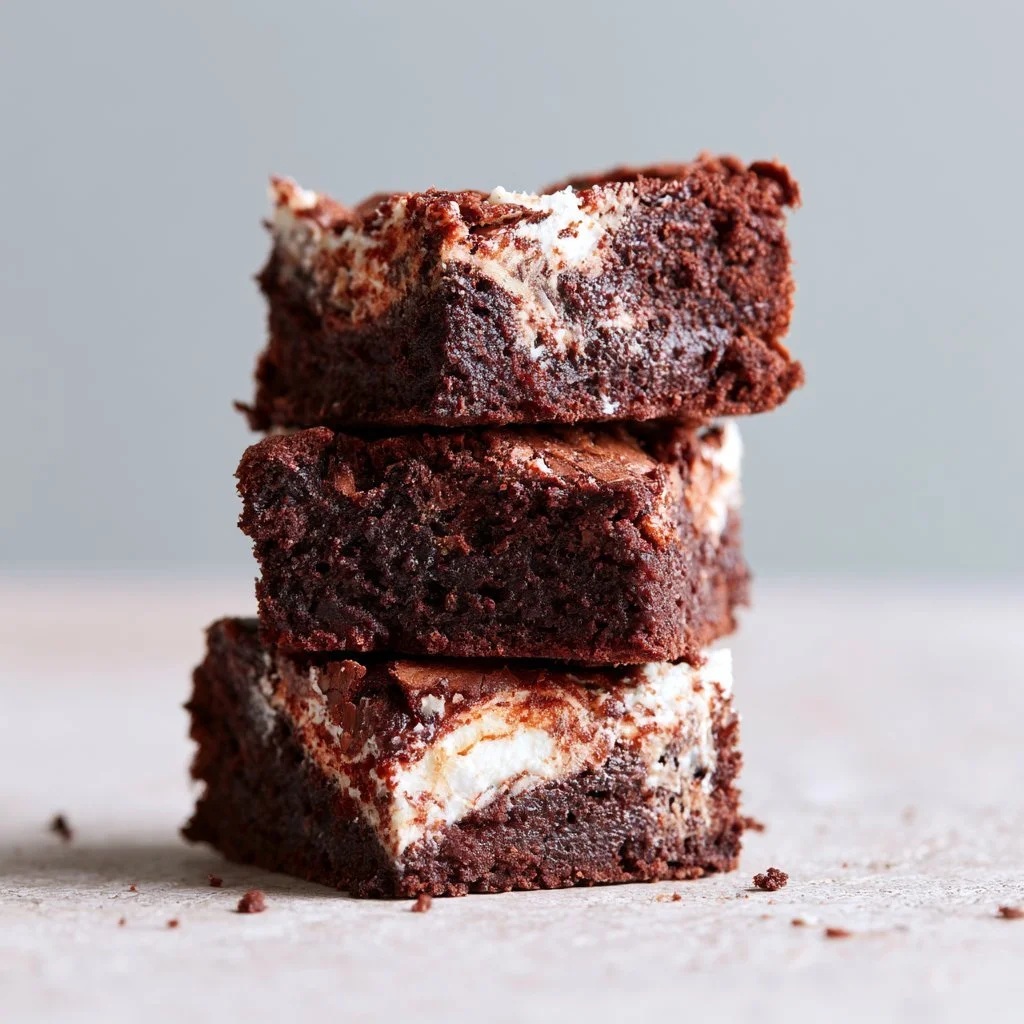
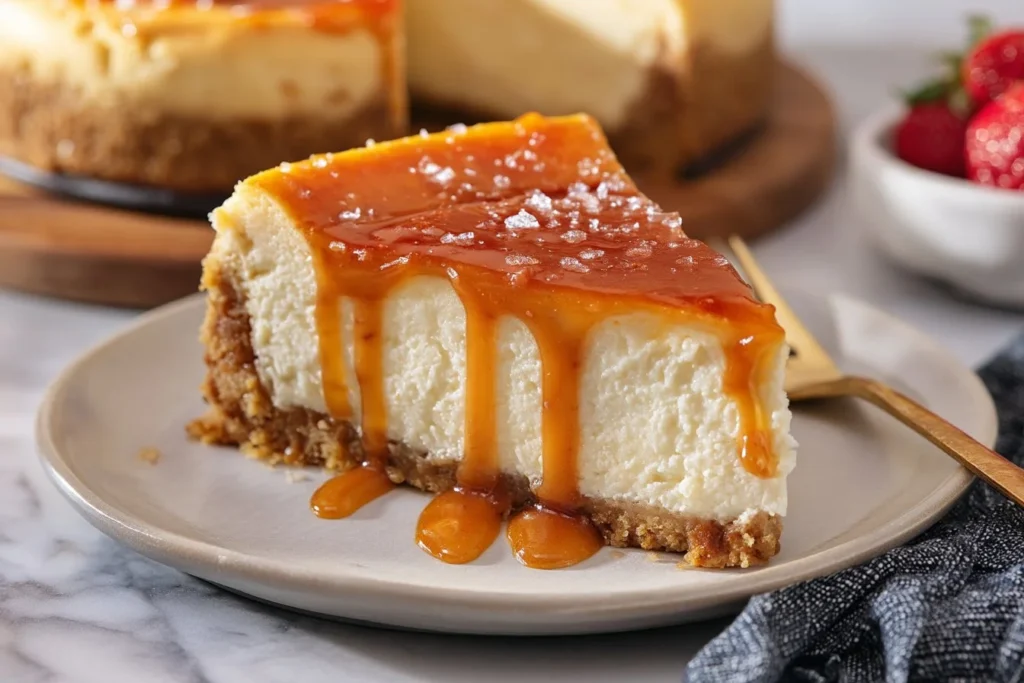
This simple baked cheesecake is designed for everyday life: quick to make, easy to chill ahead, and low on cleanup. It uses cottage cheese and Greek yogurt for a lighter texture, a small amount of coconut (or almond) flour to set, and an erythritol-style sweetener so it keeps sugar low without a strange aftertaste.
Make this when you want a modest, sliceable dessert or a rich breakfast option that won’t take all afternoon — it blends and bakes in one pan and holds up in the fridge for serving over a few days. If you like a brighter finish, try it with a spoonful of fresh berries or a simple yogurt drizzle; for a related berry-topped version, see Diabetic cheesecake with a berry topping.
Why This Recipe Works
- Cottage cheese plus Greek yogurt gives a creamy base with less heaviness than an all-cream-cheese approach, so slices feel rich without being dense. See how that texture pairs with cool toppings in the smoothie recipes roundup.
- Eggs provide structure; blending them smooth keeps the filling silky rather than curdled or grainy.
- Coconut (or almond) flour is used sparingly — just 2 tablespoons — to gently absorb moisture and help the cake set without a dry, crumbly bite.
- Erythritol (or a comparable sugar substitute) keeps sweetness steady without liquid changes that can affect baking chemistry.
- One-pan method and a 9-inch pie pan keep cleanup minimal and make slices easy to portion for meal prep.
- Chills for at least two hours give the cheesecake a clean slice and a firm, mousse-like mouthfeel ideal for portion-controlled servings.
Quick Kitchen Note
I reach for this recipe when I want a make-ahead dessert or a grab-and-go breakfast that still feels a little special; it’s forgiving if you’re batching for the week and takes well to simple toppings or a side of fruit.
What It Tastes Like
This cheesecake is mildly sweet with a clean vanilla-lemon lift from the lemon juice and vanilla extract. It’s lighter than traditional cheesecakes — tender and slightly custardy in the center with firmer edges — and the aroma is fresh rather than cloying. The coconut or almond flour gives a subtle, nutty whisper rather than a dense crust.
Ingredients
The key players here are the cottage cheese for body, eggs for structure, Greek yogurt for creaminess, and a small amount of flour to set the filling without a crust. The recipe lists options where one ingredient can be swapped without changing method.
- 1 cup cottage cheese
- 4 large eggs
- 1/2 cup Greek yogurt
- 1/4 cup erythritol (or other sugar substitute)
- 1 teaspoon vanilla extract
- 1 tablespoon lemon juice
- 2 tablespoons coconut flour (or almond flour)
- Pinch of salt
Step-by-Step Instructions
- Preheat and prepare: Preheat the oven to 350°F (175°C). Grease a 9-inch pie pan so the cheesecake will release cleanly after baking.
- Blend the filling: In a blender or food processor, combine the cottage cheese, eggs, Greek yogurt, erythritol, vanilla, lemon juice, coconut (or almond) flour, and salt. Blend until completely smooth — no visible curds — and the mixture looks glossy and slightly thickened.
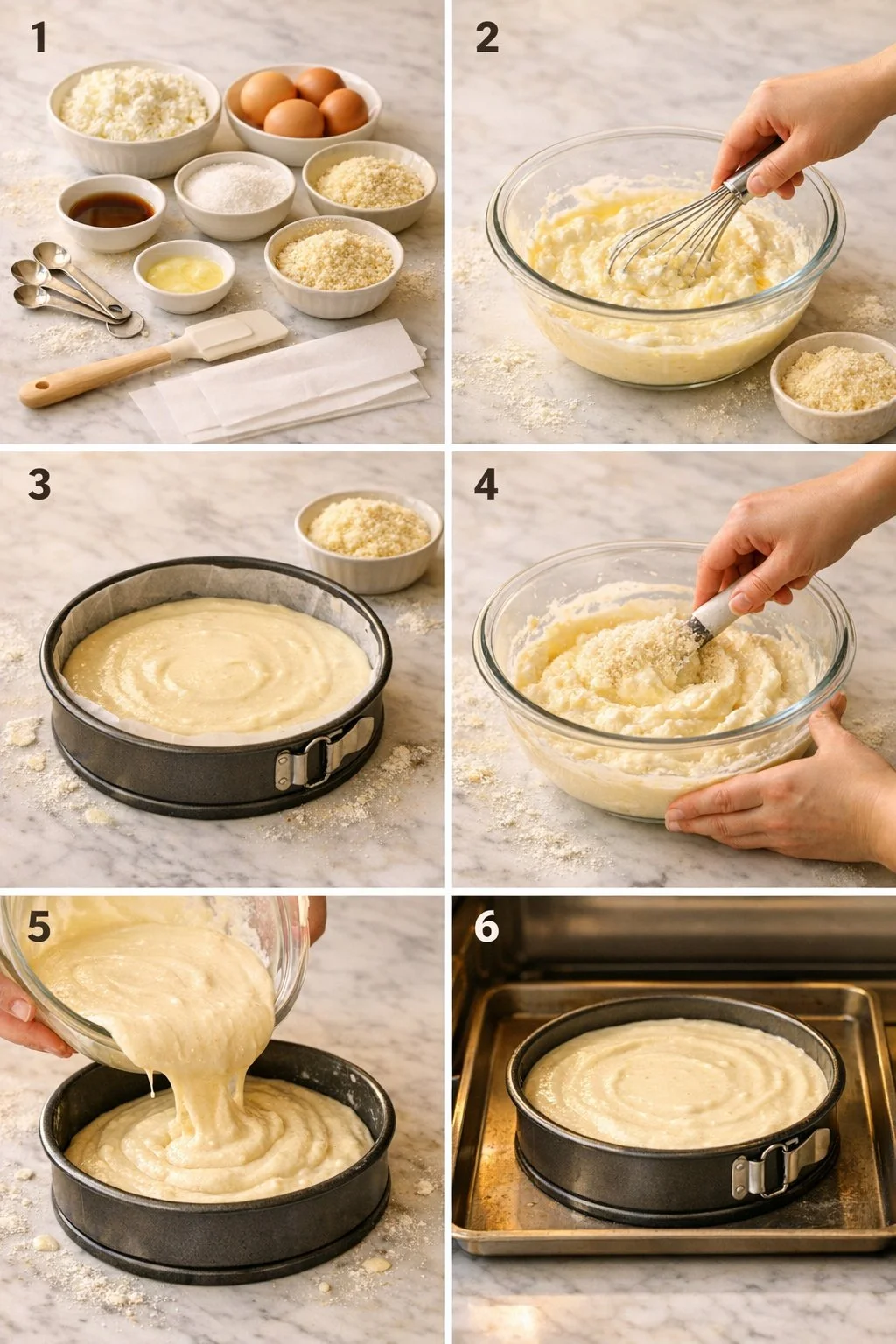
- Transfer to pan: Pour the blended mixture into the prepared 9-inch pie pan, smoothing the top with a spatula so it bakes evenly.
- Bake until set: Bake 45–50 minutes. The edges should look set and slightly puffed; the center will appear mostly set but may have a gentle wobble — it should not look liquid. If the center is still soupy after 50 minutes, bake an additional 3–5 minutes and check again.
- Cool and chill: Let the cheesecake cool to room temperature on a rack, then refrigerate for at least 2 hours before serving. Chilling firms the filling and gives the clean slices described above.
Common Mistakes to Avoid
- Under-blending the cottage cheese: leaves a grainy texture. Fix: blend until the mixture is visibly smooth and glossy.
- Overbaking: long bake times can dry the cake and create cracks. Fix: use the gentle-wobble test — edges set, center slightly jiggly — and remove promptly.
- Skipping the chill: slicing warm cheesecake yields a soft, messy slice. Fix: refrigerate at least 2 hours for clean portions.
- Using too much flour: coconut flour is highly absorbent; adding more makes the cake dense. Fix: stick to 2 tablespoons or swap for the listed almond flour amount.
Variations and Swaps
- Flour swap: use almond flour instead of coconut flour if you prefer a milder nut flavor; both work with the same method.
- Sweetener swap: erythritol can be replaced with a granular sugar substitute labeled for 1:1 baking use (stevia/monk fruit blends that specify 1:1 are realistic alternatives).
- Make it fruit-topped: serve cold with a small handful of fresh berries for brightness (see the berry-topped version linked above). For small, diabetes-friendly snack ideas to pair with slices, check the snack round-up.
Serving Suggestions
Serve chilled slices with a dollop of plain Greek yogurt or a scattering of fresh berries. A thin smear of nut butter on the side adds a savory contrast that suits the cheesecake’s subtle sweetness.
Storage and Meal Prep
Store wrapped or in an airtight container in the refrigerator for up to 4 days. Slices hold their texture well, making this good for portioned breakfasts or dessert-ready snack containers. Freezing is possible but may change texture slightly; if you freeze, wrap tightly and thaw overnight in the fridge before serving. For batch meal plans that include savory mains, consider pairing with one-pan casseroles from the casserole collection for balanced meal prep.
FAQs
Q: Can I make this ahead? A: Yes — make it a day ahead and refrigerate at least 2 hours; flavor and texture improve after chilling.
Q: Can I use ricotta instead of cottage cheese? A: Yes, ricotta will produce a slightly finer texture; blend the same way until smooth.
Q: Why is my cheesecake grainy? A: Graininess usually means the cottage cheese wasn’t fully pureed. Blend longer until glossy and smooth.
Q: How should I serve it? A: Serve cold or let slices sit 10–15 minutes at room temperature for a softer mouthfeel.
Final Tip
If you want tidy slices, run a sharp knife under hot water, dry it, and slice between servings — warming the knife gives smoother cuts without changing the cake’s texture.
Conclusion
For alternative sugar-free baked versions and technique inspiration, these recipes are useful references: Wholesome Yum’s keto cheesecake, Good Noms Honey’s sugar-free cheesecake, and Gemma’s sugar-free baked cheesecake.
Diabetic Cheesecake
Ingredients
Method
- Preheat the oven to 350°F (175°C) and grease a 9-inch pie pan.
- In a blender or food processor, combine the cottage cheese, eggs, Greek yogurt, erythritol, vanilla, lemon juice, coconut flour, and salt. Blend until completely smooth and glossy.
- Pour the blended mixture into the prepared pie pan, smoothing the top with a spatula.
- Bake for 45–50 minutes until the edges are set and the center has a gentle wobble.
- If the center is soupy after 50 minutes, bake an additional 3–5 minutes.
- Let the cheesecake cool to room temperature, then refrigerate for at least 2 hours before serving.