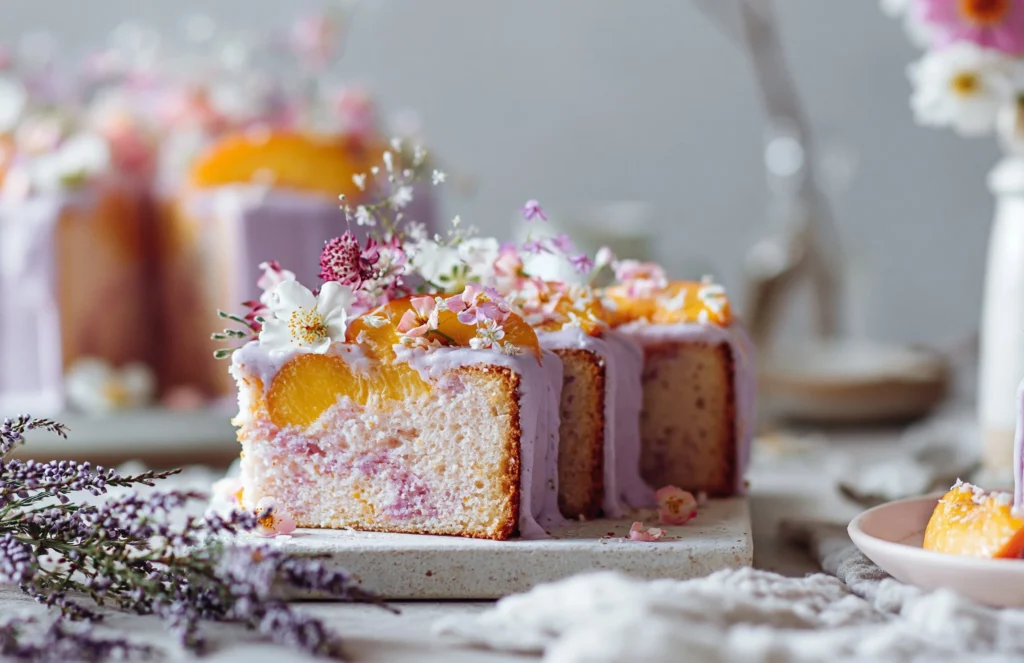
Some cakes are for big celebrations; this one is for the in-between moments—when you have a bowl, a whisk, and a handful of ripe peaches that won’t wait. Lavender Peach Cake is especially useful in late spring and summer when fresh peaches are easy to find, and you want something a little different than the usual vanilla sheet cake without turning it into an all-day project. It’s also a smart “bring-it” dessert because it slices cleanly and travels well once cooled.
The payoff here is straightforward: a tender, lightly buttery crumb with juicy peach pockets and a calm floral note from dried lavender. It’s a single-bowl rhythm (dry + wet + fold), minimal cleanup, and it bakes in about half an hour. If you like the low-effort feel of my 3-ingredient creamy yogurt cake but want something more seasonal and aromatic, this is a good next bake.
Why This Recipe Works
- Dried lavender is mixed into the flour so it disperses evenly—no biting into one concentrated floral pocket.
- Baking powder + baking soda give lift and tenderness, which helps the crumb stay light even with juicy fruit folded in.
- Butter and sugar are creamed until fluffy, building structure early so the cake rises evenly instead of baking up dense.
- Fresh peaches are folded in at the end to keep them intact; you get distinct fruit pieces rather than peach “smear” through the batter.
- A 9-inch round pan keeps bake time realistic (30–35 minutes) and makes doneness cues easy to read from the center.
- No frosting required—the lavender-peach aroma does the work, and the cake is satisfying plain once cooled.
Quick Kitchen Note
I rely on cakes like this when I want a dessert that feels intentional but doesn’t require layering, chilling, or special equipment—mix, bake, cool, slice. The key is stopping mixing as soon as the flour disappears; that’s what keeps the crumb soft and not chewy.
What It Tastes Like
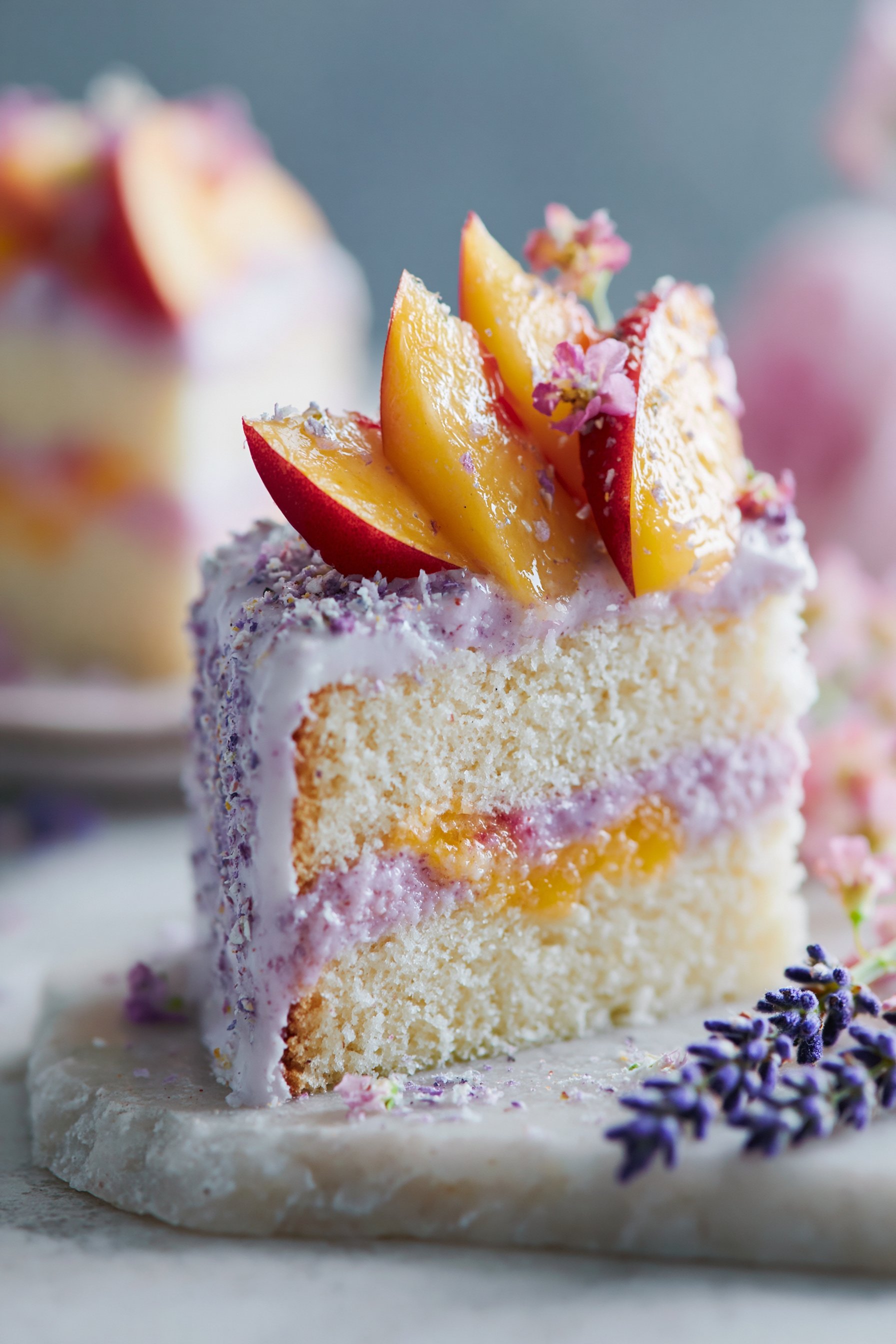
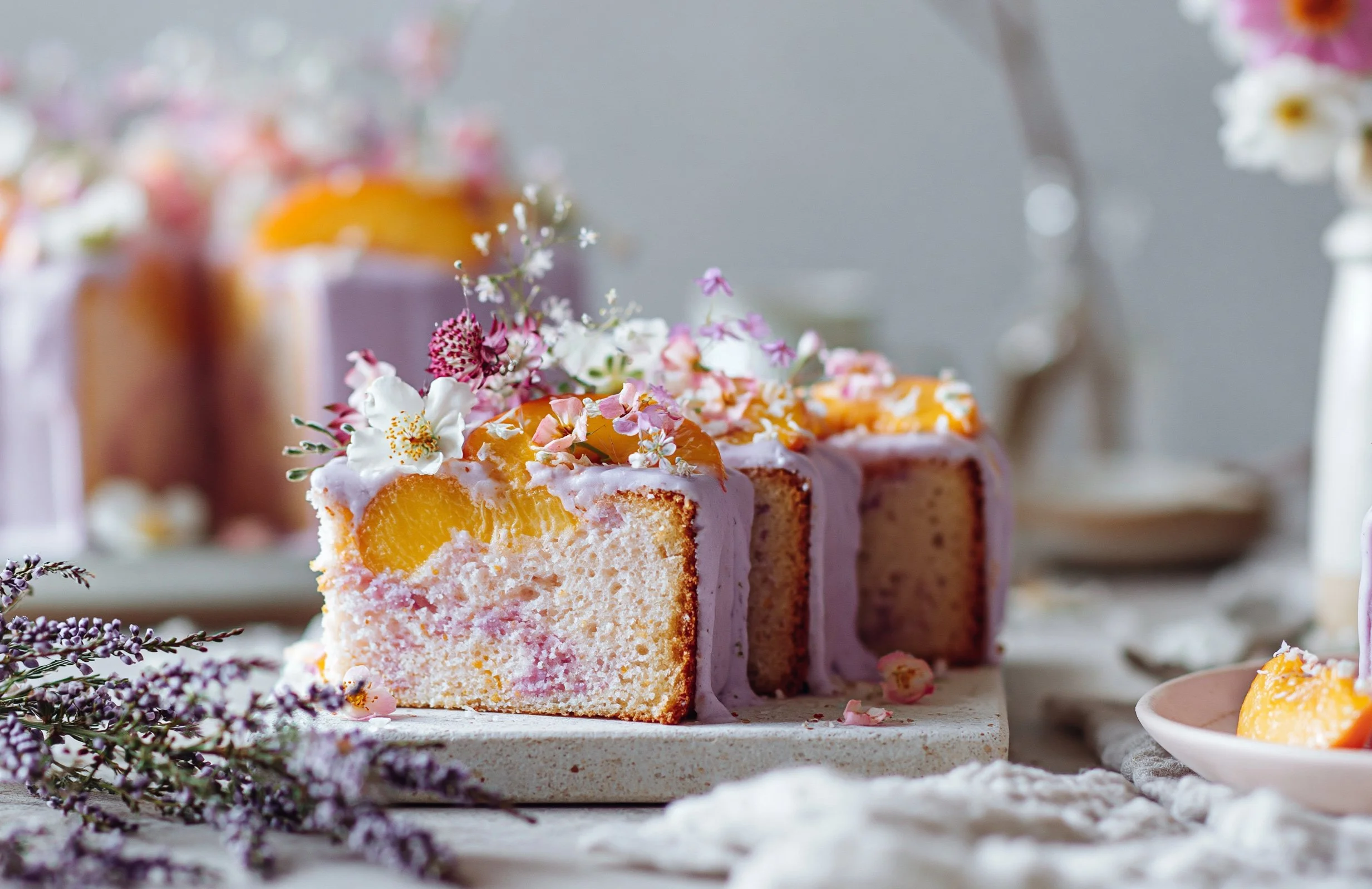
This cake is gently sweet with a clean vanilla backbone, soft butter richness, and a light floral perfume from the lavender (noticeable but not soapy when measured). The crumb is tender and springy, and the diced peaches bake into jammy pockets that keep each slice moist. The finish is fragrant and slightly fruity rather than heavy.
Ingredients
Lavender and peaches are the headline, but the supporting cast matters: softened butter creams smoothly with sugar for lift, eggs add structure, and milk keeps the batter loose enough to fold in fruit without overworking it. If you only have frozen peaches, thaw and drain them well first so you don’t water down the batter; everything else should stay the same for best results.
- 1 1/2 cups all-purpose flour
- 1 cup granulated sugar
- 1/2 cup unsalted butter, softened
- 2 large eggs
- 1/2 cup milk
- 2 teaspoons dried lavender
- 1 teaspoon baking powder
- 1/2 teaspoon baking soda
- 1/4 teaspoon salt
- 1 cup fresh peaches, peeled and diced
- 1 teaspoon vanilla extract
Step-by-Step Instructions
- Heat the oven and prep the pan. Preheat to 350°F (175°C). Grease a 9-inch round cake pan, making sure you coat the bottom and sides so the cake releases cleanly.
- Whisk the dry ingredients. In a medium bowl, whisk together the flour, baking powder, baking soda, salt, and dried lavender. You’re aiming for an even mix with no visible lavender clumps.
- Cream butter and sugar until fluffy. In a separate bowl, beat the softened butter and granulated sugar until the mixture looks lighter in color and airy, not greasy or granular. This step helps the cake rise evenly.
- Add eggs, then milk and vanilla. Beat in the eggs until fully incorporated. Mix in the milk and vanilla extract until the batter looks smooth and cohesive.
- Combine wet and dry—gently. Add the dry mixture to the wet mixture gradually, stirring just until you don’t see dry flour. The batter should look thick and smooth; stop mixing as soon as it comes together to avoid a tough crumb.
- Fold in the peaches. Gently fold in the diced peaches so they’re evenly distributed. Use a light hand—overmixing here can break the fruit down and make the batter heavy.
- Fill the pan. Pour the batter into the prepared pan and smooth the top so it bakes level.
- Bake. Bake for 30–35 minutes, until the top looks set and a toothpick inserted in the center comes out clean (a few moist crumbs are fine; wet batter is not).
- Cool properly. Let the cake cool in the pan for 10 minutes, then transfer to a wire rack to cool completely. This brief rest helps the cake firm up so it doesn’t crack when you turn it out.
Common Mistakes to Avoid
- Using butter that’s too cold (or melted): Cold butter won’t cream properly and melted butter can make the batter greasy. Fix: Let butter soften until it presses easily but still holds shape.
- Overmixing after adding flour: This develops gluten and turns the crumb chewy. Fix: Mix just until the last streak of flour disappears.
- Cutting peaches too small: Tiny pieces can dissolve and disappear into the batter. Fix: Dice into clear, bite-sized pieces so you get distinct fruit pockets.
- Overbaking past the toothpick test: A few extra minutes can dry out a simple butter cake. Fix: Start checking at 30 minutes; pull when the center tests clean.
- Skipping the 10-minute pan cool: Turning out immediately can cause breakage. Fix: Set a timer—10 minutes is enough to stabilize without steaming the cake.
Variations and Swaps
- Dial the lavender up or down: If you’re new to lavender, use a level 2 teaspoons and keep it evenly whisked through the flour. If you love floral flavor, stay within the same measure and focus on even distribution rather than adding more.
- Different pan shape: If you don’t have a 9-inch round pan, choose a similar-volume cake pan you trust; watch for the same doneness cues (set top, clean toothpick) since timing can shift.
- If you’re baking for almond lovers: My almond flour cupcakes are a better fit than trying to swap flours here—this batter is built around all-purpose flour and a specific rise.
Serving Suggestions
This cake is happiest served at room temperature once fully cooled—flavor and texture show up more clearly that way. Slice it as-is for a simple dessert, or serve it alongside a bowl of fruit for a lighter plate. If you’re putting together a small dessert spread, pair it with something citrusy like my lemon cake so the floral-peach notes have a bright counterpoint.
Storage and Meal Prep
- Room temperature (short term): Once fully cooled, store the cake covered to protect the crumb from drying out.
- Refrigerator (longer hold): If your kitchen runs warm, refrigerate it covered; let slices sit at room temperature briefly before serving so the texture softens.
- Make-ahead: Bake the day before, cool completely, and keep it covered. The lavender aroma settles in nicely overnight, and the peach pockets stay tender.
- Freezing: This style of cake can be frozen in slices once cooled; wrap well to prevent freezer odors, and thaw covered so condensation doesn’t make the surface sticky.
- Lunchbox-friendly: A slice holds together well for an afternoon snack; for a more portable option, my bakery-style almond flour cupcakes are even easier to pack.
FAQs
Can I make this cake ahead of time?
Yes. Bake it, cool completely, and cover. It’s a good next-day cake because the lavender and vanilla read a little clearer after resting.
My cake baked up a little dense—what happened?
Most often it’s from overmixing after adding the flour or not creaming the butter and sugar enough. Mix just to combine, and cream until the mixture looks lighter and fluffy.
Do I have to peel the peaches?
Peeling gives the cleanest texture in the crumb. If you leave skins on, you’ll see more dark flecks and get a slightly more rustic bite.
How do I know it’s done without overbaking?
Start checking at 30 minutes. The center should be set (not jiggly), and a toothpick should come out clean or with a few moist crumbs—no wet batter.
Final Tip
Measure the lavender carefully and whisk it thoroughly into the flour—good distribution is what makes the flavor read “floral and fresh” instead of concentrated in a few bites.
Conclusion
If you want to explore other approaches to the same flavor combination, compare this simple home-style method with the nuttier direction in Lavender, Peach Cake with Walnuts, watch the technique-focused Peach Lavender Cake (video), or pivot to a spoonable version with Lavender Peach Cobbler with Honey Whipped Cream.
Lavender Peach Cake
Ingredients
Method
- Preheat the oven to 350°F (175°C) and grease a 9-inch round cake pan.
- In a medium bowl, whisk together the flour, baking powder, baking soda, salt, and dried lavender.
- In a separate bowl, cream the softened butter and granulated sugar until the mixture is light and airy.
- Beat in the eggs until fully incorporated, then mix in the milk and vanilla extract until smooth.
- Gradually add the dry mixture to the wet mixture, stirring until no dry flour remains.
- Gently fold in the diced peaches.
- Pour the batter into the prepared pan and smooth the top.
- Bake for 30–35 minutes, until the top looks set and a toothpick comes out clean.
- Let the cake cool in the pan for 10 minutes before transferring it to a wire rack.