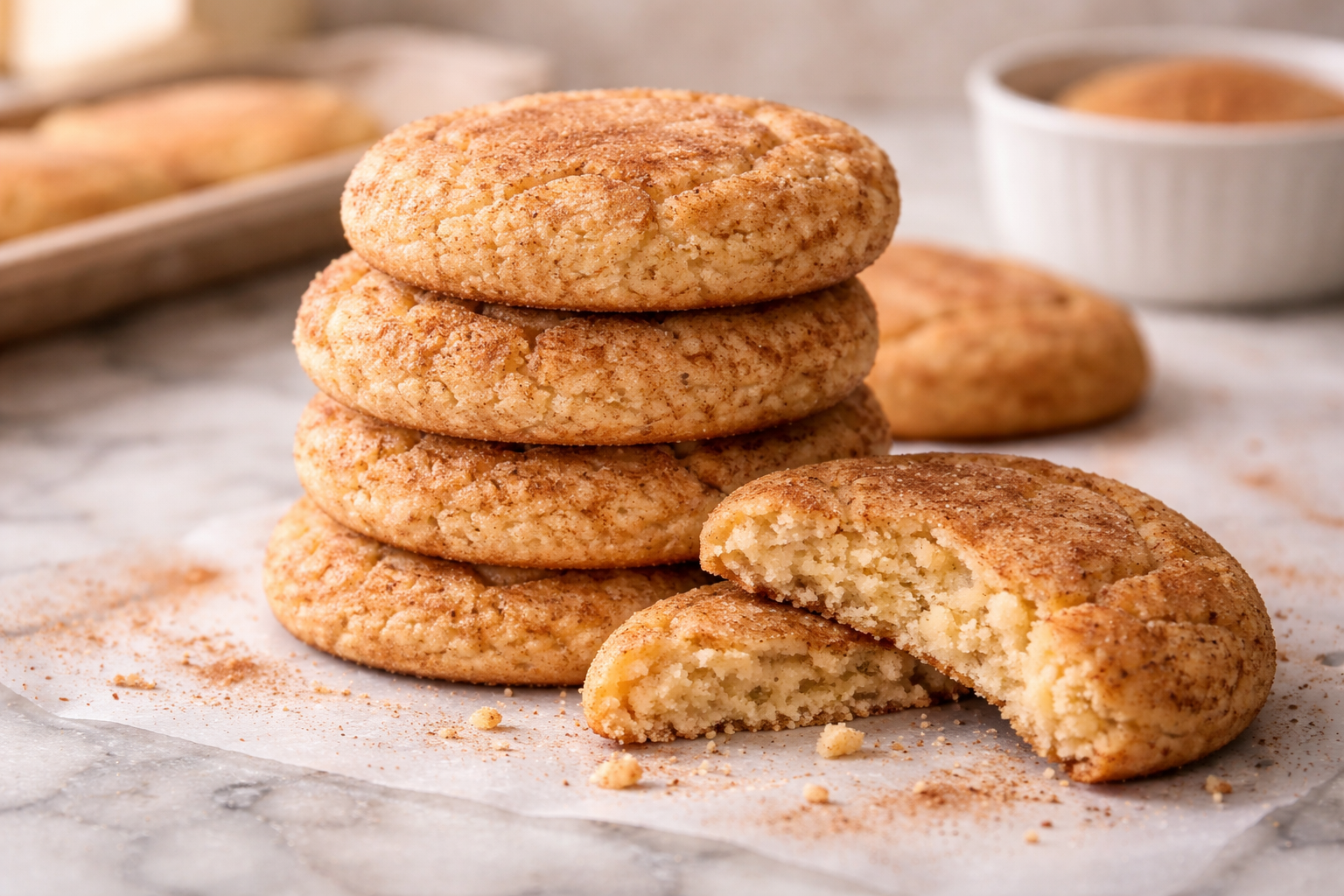
Ingredients
Method
- Preheat the oven to 350°F (175°C). Line 2 baking sheets with parchment paper and set aside.
- In a large mixing bowl, beat the softened butter, 3/4 cup granulated sugar substitute, and 1/4 cup brown sugar style substitute with a hand mixer on medium speed until pale and fluffy, about 2 to 3 minutes. Scrape down the sides of the bowl as needed.
- Add the eggs one at a time, beating well after each addition, then mix in the vanilla extract until the mixture is smooth and slightly thick.
- In a separate bowl, whisk together the flour, cream of tartar, baking soda, salt, and 1/2 teaspoon ground cinnamon until well combined.
- Add the dry ingredients to the butter mixture in 2 to 3 additions, mixing on low speed just until no dry streaks of flour remain. Do not overmix. The dough should be soft but not overly sticky.
- If the dough feels too sticky to roll, cover the bowl and chill in the refrigerator for 20 to 30 minutes until slightly firm.
- While the dough chills, stir together 1/3 cup granulated sugar substitute and 1 1/2 teaspoons ground cinnamon in a shallow bowl to make the coating.
- Use a small cookie scoop or tablespoon to portion the dough into balls about 1 1/4 to 1 1/2 inches across. Roll each portion between your palms to form a smooth ball.
- Roll each dough ball in the cinnamon-sugar substitute mixture until evenly coated, then place on the prepared baking sheets, spacing them about 2 inches apart to allow for spreading.
- Bake one sheet at a time in the preheated oven for 9 to 11 minutes, or until the edges are set and lightly golden and the centers look puffy and slightly underbaked.
- Remove the baking sheet from the oven and let the cookies cool on the sheet for 5 minutes to firm up, then transfer them carefully to a wire rack to cool completely.
- Repeat with the remaining dough, allowing the baking sheets to cool between batches if necessary.
Notes
For gluten free cookies, use a 1:1 gluten free flour blend that includes xanthan gum; the cookies may spread slightly less and have a more tender crumb.
For dairy free cookies, replace the butter with a plant-based baking stick that is at least 75% fat; avoid tub-style spreads, which can make the cookies greasy and flat.
Sugar free cookies firm up as they cool, so remove them from the oven while the centers still look a bit soft to keep them chewy.
The dough can be made up to 48 hours ahead and chilled; let it sit at room temperature for 15 to 20 minutes before scooping if very firm.
To freeze, scoop and roll dough into balls, freeze on a tray until solid, then store in a freezer bag. Roll frozen dough balls in cinnamon sugar substitute and bake from frozen, adding 1 to 2 minutes to the baking time.
For dairy free cookies, replace the butter with a plant-based baking stick that is at least 75% fat; avoid tub-style spreads, which can make the cookies greasy and flat.
Sugar free cookies firm up as they cool, so remove them from the oven while the centers still look a bit soft to keep them chewy.
The dough can be made up to 48 hours ahead and chilled; let it sit at room temperature for 15 to 20 minutes before scooping if very firm.
To freeze, scoop and roll dough into balls, freeze on a tray until solid, then store in a freezer bag. Roll frozen dough balls in cinnamon sugar substitute and bake from frozen, adding 1 to 2 minutes to the baking time.