Some nights, I just need dinner to happen fast—without sacrificing that “real meal” feeling. This 30-minute beef stir fry is what I reach for when the fridge has a few mixed vegetables that need using and I want something savory and glossy over rice or noodles with minimal cleanup.
Sirloin cooks quickly, the vegetables stay crisp-tender, and the sauce is a simple soy–oyster combination that coats everything without turning heavy. If you like the flexible, skillet-driven style of my Chinese beef and broccoli, this is the weeknight version you can adapt to whatever produce you have.
Why This Recipe Works
- Fast, high-heat cooking keeps the beef tender. Thinly sliced sirloin browns in 3–4 minutes, so you get flavor without drying it out.
- A simple two-sauce base does the heavy lifting. Soy sauce brings salt and depth; oyster sauce adds a subtle sweetness and a glossy finish.
- The vegetable timing is built in. Adding vegetables after the aromatics keeps them tender-crisp, not soft and waterlogged.
- Sesame oil adds a nutty backbone quickly. You get that stir-fry aroma with one tablespoon—no long ingredient list required.
- It’s naturally “use-what-you-have” friendly. Bell peppers, broccoli, and snap peas all work, but the method holds up with any mix that stir-fries well.
- One pan, one main step. A single skillet or wok goes from stovetop to table, which makes it a practical staple alongside other quick mains like crispy air fryer chicken parmesan on nights you want variety without extra effort.
Quick Kitchen Note
Stir fries are dependable because the order matters more than the exact mix: hot pan first, quick beef sear, aromatics briefly, then vegetables, then sauce to finish. If you keep that rhythm, you can make this feel consistent even when your vegetable drawer is unpredictable.
What It Tastes Like
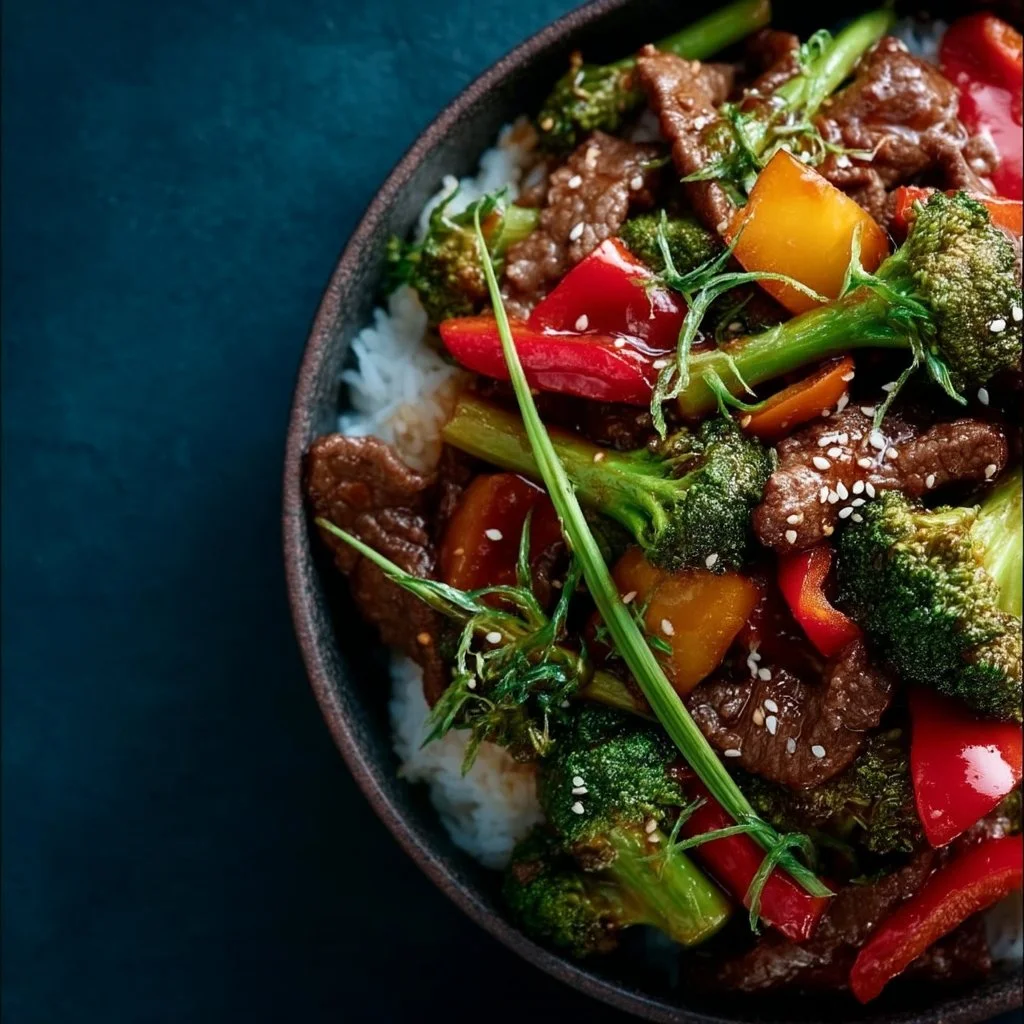
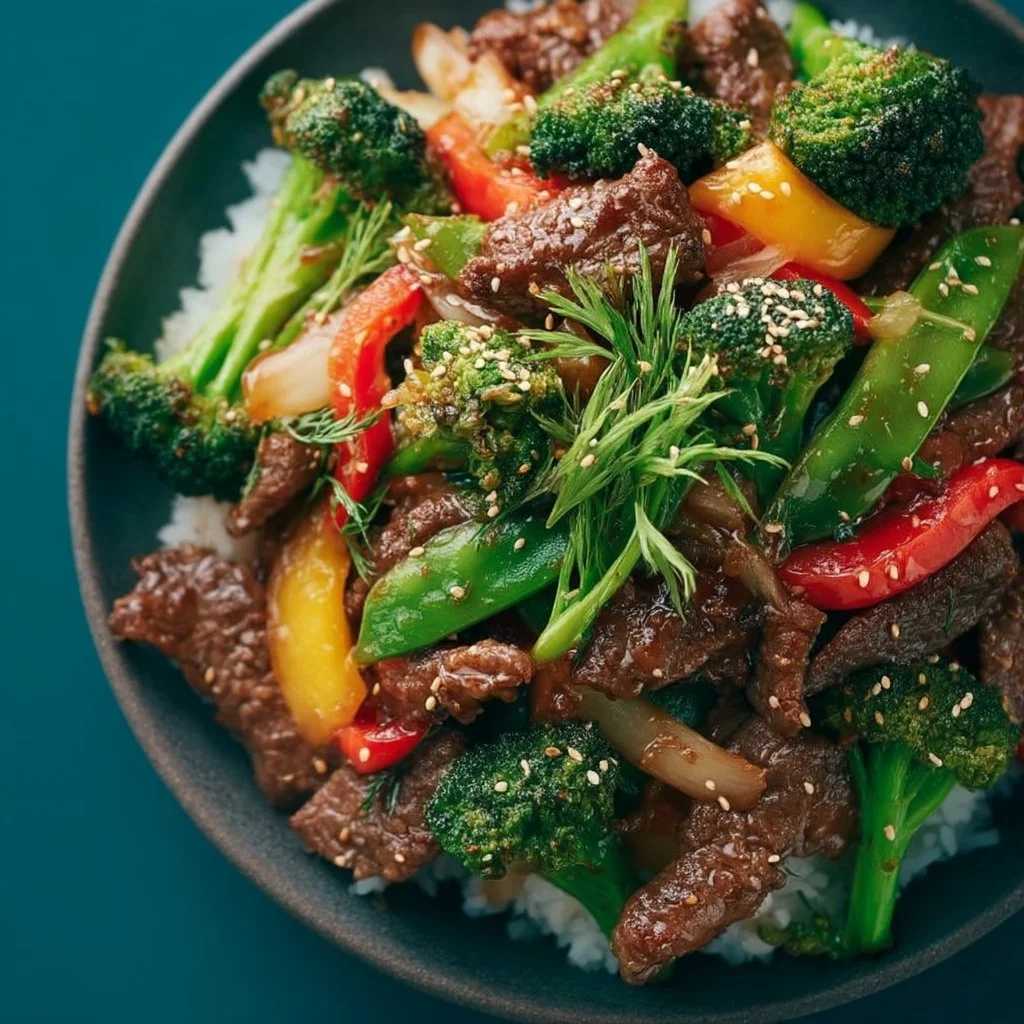
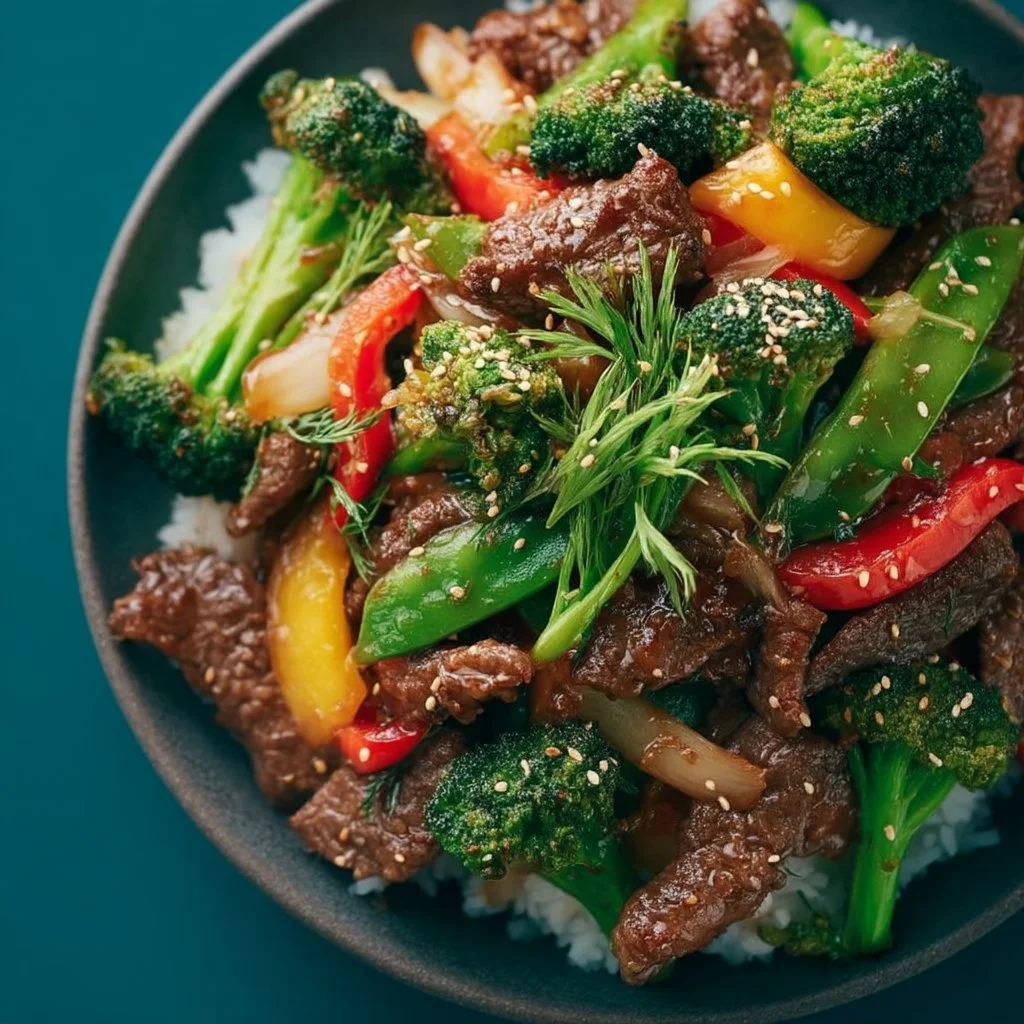
This one lands squarely in savory, aromatic comfort: nutty sesame oil up front, garlicky-ginger warmth in the middle, and a salty-sweet glaze from the soy and oyster sauces. The beef is browned and juicy, the vegetables stay bright and crisp-tender, and the finish is glossy rather than soupy—especially good over rice or noodles that can catch the sauce.
Ingredients
This recipe leans on a short list: sirloin for quick tenderness, garlic and ginger for punchy aroma, and a soy–oyster sauce combo for instant depth and sheen. For vegetables, use a mix that can handle high heat (crisp items like broccoli, snap peas, and peppers are ideal); if you swap, aim for a similar “stir-fry-able” texture so the timing still works.
- 1 pound beef sirloin, thinly sliced
- 2 cups mixed vegetables (e.g., bell peppers, broccoli, snap peas)
- 2 tablespoons soy sauce
- 1 tablespoon oyster sauce
- 1 tablespoon sesame oil
- 2 cloves garlic, minced
- 1 teaspoon fresh ginger, minced
- Salt and pepper to taste
- Cooked rice or noodles for serving
Step-by-Step Instructions
- Heat the pan. Set a large skillet or wok over medium-high heat and add the sesame oil. You’re looking for the oil to shimmer—hot enough that the beef will sizzle on contact.
- Brown the beef (3–4 minutes). Add the thinly sliced sirloin and spread it out as best you can. Let it cook, stirring occasionally, until the edges are browned and the beef looks mostly cooked through.
- Cue: browned spots + no visible raw surfaces on most pieces.
- Bloom the aromatics (about 1 minute). Add the minced garlic and ginger. Stir-fry just until fragrant.
- Warning: keep it moving so the garlic doesn’t scorch, which can turn it bitter fast.
- Stir-fry the vegetables (3–4 minutes). Add the mixed vegetables and stir-fry until they’re tender-crisp—bright in color, slightly softened, but still with snap.
- Cue: broccoli turns vivid green; peppers soften at the edges; snap peas brighten and bend slightly without going limp.
- Add the sauces. Pour in the soy sauce and oyster sauce. Stir well to coat the beef and vegetables evenly. The pan should look glossy, with sauce clinging to the food rather than pooling heavily.
- Heat through (1–2 minutes). Cook just long enough for everything to come back up to temperature and the sauce to distribute evenly.
- Season to finish. Taste carefully, then add salt and pepper as needed. (The sauces are already salty, so go lightly on extra salt.)
- Serve. Spoon the stir fry over cooked rice or noodles and serve right away while the vegetables are still crisp-tender.
Common Mistakes to Avoid
- Slicing the beef too thick: Thick slices take longer to cook and can turn chewy. Fix: slice thinly so it browns in the stated 3–4 minutes.
- Adding garlic and ginger too early: Aromatics can burn during the beef browning time. Fix: add them after the beef is browned, and stir constantly for that quick 1-minute bloom.
- Overcooking the vegetables: Stir-fry vegetables go from crisp to soft quickly. Fix: stop at tender-crisp—bright color and slight bite—then add sauce.
- Over-salting at the end: Soy sauce and oyster sauce bring plenty of seasoning. Fix: taste first; add salt only if it truly needs it.
- Letting the stir fry sit in the pan too long: Residual heat keeps cooking the vegetables. Fix: serve immediately once heated through.
Variations and Swaps
Keep the core method the same (beef → aromatics → vegetables → sauces), and make small, sensible adjustments:
- Vegetable swaps: Any quick-cooking mix works well. Aim for pieces cut to similar size so they finish together.
- Serving format: Rice and noodles both work—choose rice for a clean base or noodles for a more slurpable, sauce-catching bowl. If you’re building a weekly rotation, I’ll often pair this with something snacky or crunchy on the side like air fryer banana chips for contrast.
- Beef-focused options: If you’re planning more beef dinners, bookmark these beef recipe ideas for additional weeknight-friendly directions using similar cuts and timing.
Serving Suggestions
- Over rice: Great when you want the sauce to soak in and mellow the garlic-ginger edge.
- Over noodles: Best when you want a slightly richer, more cohesive bowl—noodles grab onto the glossy sauce.
- Portioning for the table: Serve the stir fry family-style and let everyone choose rice or noodles underneath.
Storage and Meal Prep
- Refrigerate leftovers in an airtight container and use within a few days.
- Reheat gently in a skillet over medium heat just until warmed through; this helps preserve the vegetables’ texture better than blasting them for too long.
- Meal prep tip: Store rice or noodles separately from the stir fry if you can. It keeps the starch from soaking up all the sauce and turning soft.
FAQs
Can I make this ahead?
You can cook it ahead and refrigerate it, but it’s best right after cooking when the vegetables are still crisp-tender. If making ahead, reheat briefly to avoid overcooking.
My beef turned chewy—what happened?
Usually it’s sliced too thick or cooked too long. Thin slicing and sticking close to the 3–4 minute browning window helps a lot.
Can I use different vegetables than the examples?
Yes. Keep the total around 2 cups and choose vegetables that do well in a quick stir-fry so they can reach tender-crisp in about 3–4 minutes.
Do I need extra salt?
Maybe not. Add pepper freely, but taste before adding salt since soy sauce and oyster sauce already bring plenty of seasoning.
Final Tip
Before you start cooking, have the sauces measured and the vegetables ready to go—once the beef hits the hot pan, the rest moves quickly, and that’s what keeps the beef browned and the vegetables crisp instead of steamed.
Conclusion
If you want more stir-fry perspectives and timing cues, I also like comparing methods from a one-pan steak stir fry approach, a quick beef-and-broccoli variation, and a classic quick beef stir-fry—then stick with whichever flow fits how you cook on a weeknight.
Beef Stir Fry
Ingredients
Method
- Heat the pan over medium-high heat and add the sesame oil until shimmering.
- Add the thinly sliced sirloin and brown it for 3–4 minutes, stirring occasionally.
- Add minced garlic and ginger, cooking for about 1 minute until fragrant.
- Stir-fry the mixed vegetables for 3–4 minutes until tender-crisp.
- Pour in the soy sauce and oyster sauce, stirring to coat the beef and vegetables evenly.
- Cook for an additional 1–2 minutes to heat through.
- Adjust seasoning with salt and pepper as needed.
- Serve immediately over cooked rice or noodles.