Some nights you just need chicken that tastes like you meant to cook—without dirtying every pan you own. This rosemary-Dijon version is my go-to when I want a clean, bright marinade that doubles as the “sauce,” and I’m happy to let the oven do the work while I reset the kitchen.
It’s especially useful when you have an hour to marinate (even passively in the fridge) but want a hands-off bake. The Dijon and lemon keep the chicken juicy and flavorful, the garlic and rosemary make the whole kitchen smell like dinner is handled, and the method stays simple. If you’re already a fan of straightforward baked chicken recipes like heart-healthy chicken casserole, this is the lighter, faster cousin for nights you want something more streamlined.
Why This Recipe Works
- Dijon + lemon is a built-in flavor system. The mustard brings savory tang and clings to the chicken, while lemon juice adds brightness that keeps the whole bite from feeling flat.
- Rosemary carries through the bake. Whether you use dried or fresh sprigs, rosemary holds its own in the oven and perfumes the chicken without needing extra ingredients.
- Minimal prep, minimal cleanup. Everything mixes in one shallow dish, then the oven finishes the job—no stovetop splatter, no separate sauce.
- Flexible marinating window. You can do at least 1 hour in the fridge, or a shorter 20 minutes at room temp when you’re tight on time.
- Baking covered protects lean chicken breast. Covering is a practical way to reduce drying and keep the surface from getting tough before the center is cooked.
Quick Kitchen Note
I rely on this style of recipe when I want a dependable baked chicken breast that doesn’t require babysitting—mix a punchy marinade, let it sit while I handle a side dish, then bake it covered so it stays tender.
What It Tastes Like
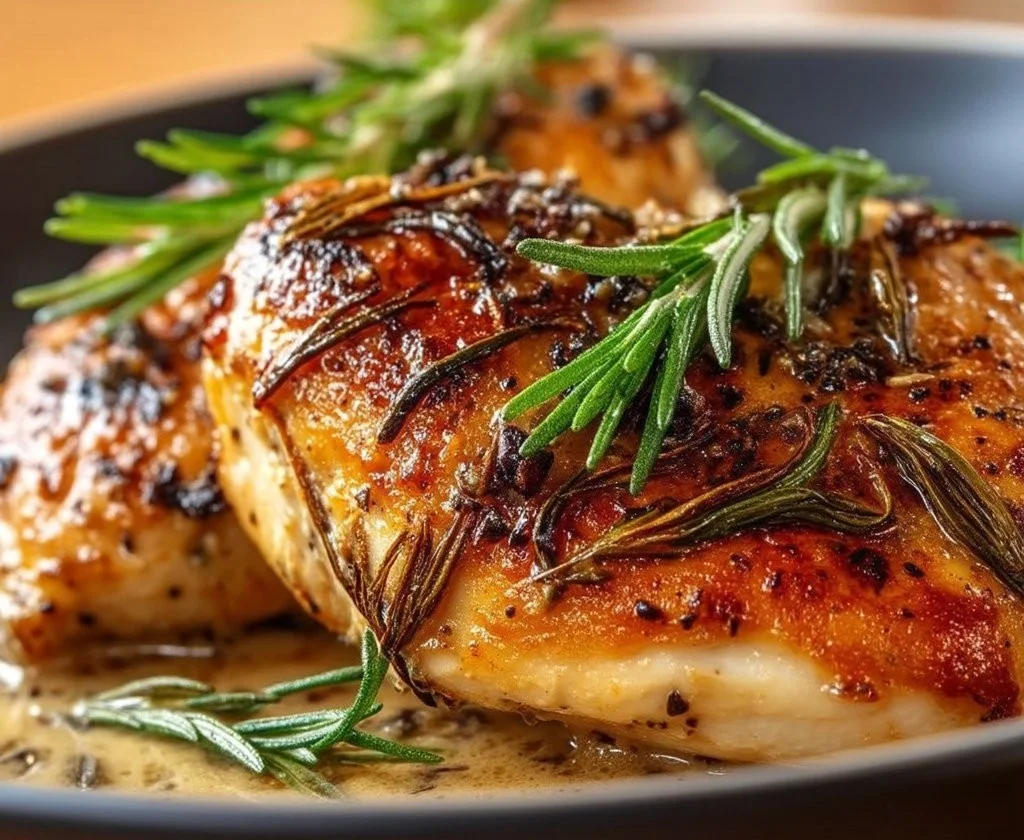
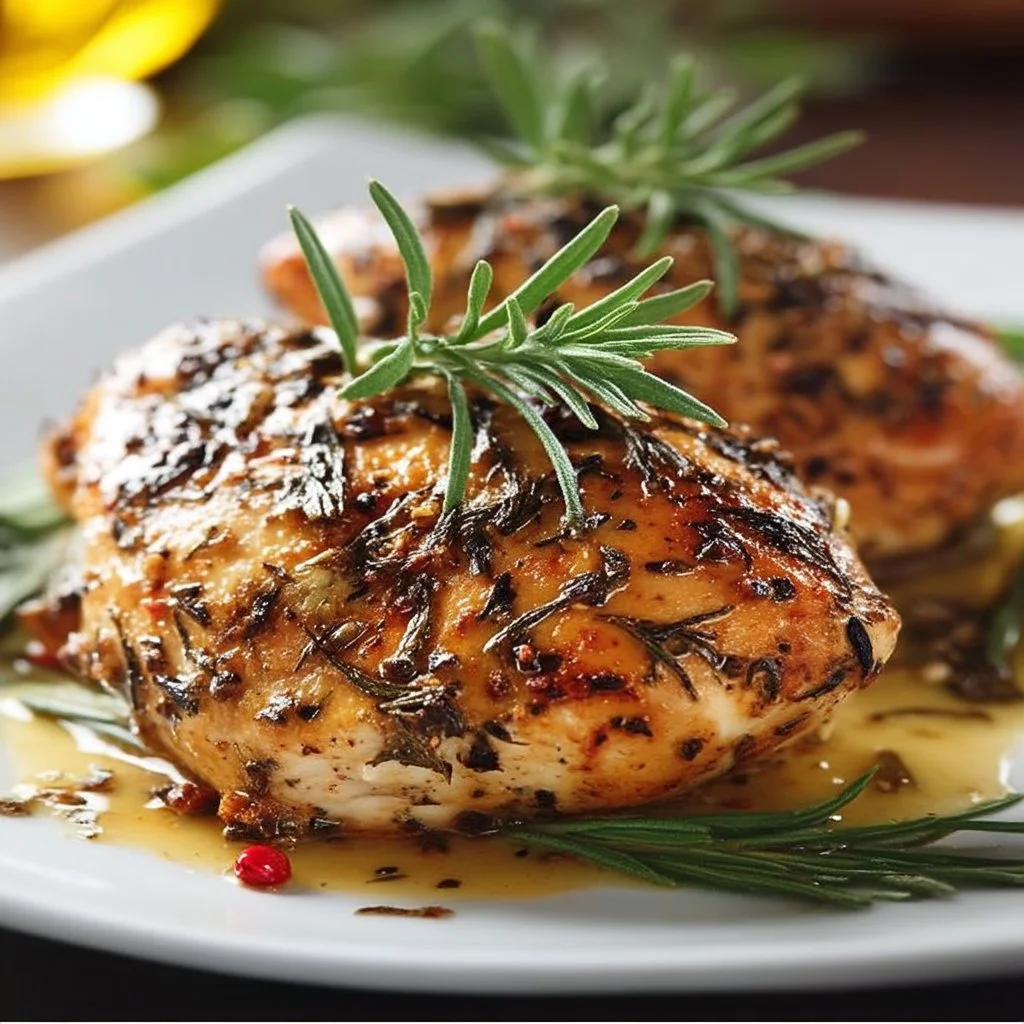
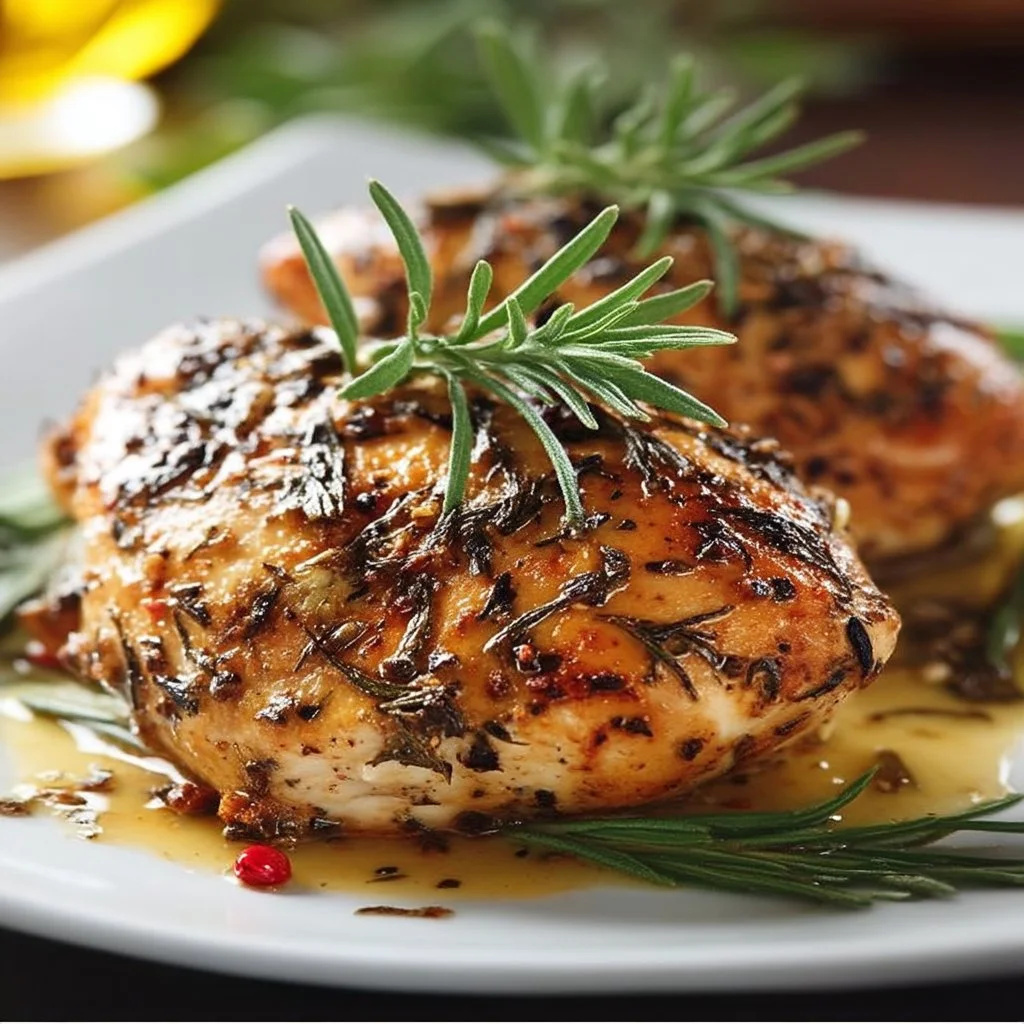
This chicken is tangy and savory with a clear lemon “lift,” mellow heat from black pepper, and that piney rosemary aroma that reads instantly as classic and dinner-ready. The texture is moist and sliceable, with a lightly slick coating of Dijon-lemon juices rather than a heavy sauce, and the finish is bright instead of rich.
Ingredients
The ingredient list is short on purpose: Dijon mustard acts as the base that clings to the chicken, lemon juice sharpens everything up, garlic adds depth, and rosemary provides that unmistakable roast-chicken fragrance. Use dried rosemary for convenience, or fresh sprigs when you want a more pronounced herbal aroma.
- 2 Tbsp Dijon mustard
- 2 Tbsp lemon juice
- 2 garlic cloves, minced
- 1 tsp dried rosemary or 4 fresh rosemary sprigs
- Black pepper to taste
- 2 boneless skinless chicken breast halves (4 oz each)
Step-by-Step Instructions
- Mix the marinade. In a shallow dish, combine the Dijon mustard, lemon juice, minced garlic, rosemary (dried or fresh), and black pepper. Stir until the mixture looks evenly blended and a little glossy.
- Coat the chicken thoroughly. Add the chicken breast halves and turn them several times so every surface is covered. You want a visible layer of the Dijon mixture clinging to the chicken, not just a quick dip.
- Marinate. Cover the dish and marinate at least 1 hour in the refrigerator, or 20 minutes at room temperature.
- If you’re marinating in the fridge, the mixture may thicken slightly—that’s normal and helps it adhere during baking.
- Preheat the oven. When you’re close to bake time, preheat the oven to 375°F.
- Bake covered. Keep the dish covered and bake for approximately 25 minutes, or until the chicken is cooked through.
- Visual cue: the chicken should look opaque throughout and the thickest part should no longer appear translucent.
- Rest briefly, then serve. Let the chicken sit for a few minutes before slicing so the juices settle back in. Spoon any pan juices over the top when you plate—it’s the easiest way to keep every bite flavorful.
Common Mistakes to Avoid
- Skipping the cover while baking. Chicken breast is lean; baking uncovered can dry the surface before the center finishes. Fix: keep it covered for the bake as directed.
- Under-marinating (especially if using dried rosemary). Dried rosemary needs a little time to wake up. Fix: aim for the 1-hour fridge marinate when you can.
- Not coating both sides well. If the Dijon mixture isn’t clinging evenly, the flavor will be patchy. Fix: turn the chicken a few extra times and press it lightly into the marinade.
- Rushing the “done” check. Time is approximate—thickness varies. Fix: look for fully opaque meat in the thickest part; bake a little longer if needed.
Variations and Swaps
- Dried vs. fresh rosemary: Use 1 tsp dried for convenience or 4 fresh sprigs for a more aromatic, herbal finish. Both work well here.
- Pepper level: Keep it mild with a light hand, or add more black pepper for a sharper bite that plays well with the mustard.
- Serving format: Slice the cooked chicken and use it for simple lunches like a wrap—if you like that idea, this is a nice flavor change from a more classic crispy chicken Caesar wrap.
Serving Suggestions
- Slice and serve with something that catches the pan juices—think a simple grain bowl setup, or alongside roasted vegetables.
- For a heartier comfort-style dinner rotation, pair it with a familiar baked chicken option like oven-baked chicken Parmesan earlier in the week, then use this Dijon-rosemary chicken as the lighter, brighter follow-up.
- If you tend to meal prep proteins, this chicken also works as a clean base to add to salads or bowls without needing an extra sauce.
Storage and Meal Prep
Store leftover chicken in an airtight container in the refrigerator and use within a few days while it’s still juicy. Reheat gently so it doesn’t dry out—covered reheating helps mimic the original bake. For meal prep, I like slicing it once it’s cool and packing it separately so it’s easy to add to lunches; it’s especially good when you spoon a little of the leftover pan juices over the slices before storing.
FAQs
Can I marinate longer than 1 hour?
Yes—1 hour is the minimum for good flavor. Keeping it covered in the refrigerator longer is fine; just bake until cooked through.
Do I have to use fresh rosemary?
No. Dried rosemary works well here (use 1 tsp). Fresh sprigs (4) give a more fragrant, herbal aroma.
Why is my chicken dry?
The most common causes are baking uncovered or baking past doneness. Keep the dish covered and stop cooking as soon as it’s opaque and cooked through.
Can I slice the chicken right away?
It’s better to wait a few minutes. Resting helps the juices redistribute so the slices stay moist.
Final Tip
If you’re pressed for time, go with the 20-minute room-temperature marinate—but still take an extra moment to really coat the chicken well in the Dijon mixture; that’s what gives you full flavor even with a shorter soak.
Conclusion
If you want to see the original inspiration for this exact style of baked mustard-lemon chicken, take a look at Heart-Healthy Rosemary Chicken Dijon. For a more hands-off, all-in-one dinner approach with rosemary in the mix, this sheet pan rosemary balsamic chicken and vegetables is a helpful reference point. And if you’re curious how a more loaded sheet-pan version handles the same lemon-rosemary-Dijon flavor direction, this lemon rosemary Dijon chicken sheet pan is an interesting compare-and-contrast for planning future variations.
Rosemary-Dijon Baked Chicken
Ingredients
Method
- In a shallow dish, combine the Dijon mustard, lemon juice, minced garlic, rosemary (dried or fresh), and black pepper. Stir until the mixture looks evenly blended and a little glossy.
- Add the chicken breast halves and turn them several times so every surface is covered. Ensure a visible layer of the Dijon mixture is clinging to the chicken.
- Cover the dish and marinate at least 1 hour in the refrigerator or for 20 minutes at room temperature.
- Preheat the oven to 375°F.
- Keep the dish covered and bake for approximately 25 minutes or until the chicken is cooked through.
- Let the chicken sit for a few minutes before slicing to allow the juices to settle. Spoon any pan juices over the top when serving.