What Makes This Recipe Reliable
I built this Keto Donut Hole recipe the way a bakery would test a new item: with repeatable steps, consistent ratios, and ingredients that behave the same every time. The combination of almond flour, a touch of coconut flour, and ground psyllium husk creates structure that holds up in the oven, so you get a tender center instead of a puddle of batter. Xanthan gum replaces gluten and adds a gentle chew, while baking powder and a higher starting oven temperature work together to lift the dough and give you that classic rounded donut hole shape.
The method works a bit like a choux style dough, which is exactly why it performs so well for low carb baking. Heating the water with avocado oil and erythritol hydrates the dry ingredients before the eggs go in. This lets you control the texture in stages. You can see and feel the dough turn from crumbly, to sticky, to elastic, instead of guessing and hoping it all comes together in the oven.
I also kept sweetness and carbs in check by using a blend of granulated and powdered erythritol. The dough uses less sweetener for balance, while the cinnamon coating adds that bakery style flavor on the outside without changing the texture inside. Each Keto Donut Hole has about 0.5 grams net carbs and 32 calories, and the ingredient list leans on common low carb pantry staples you can find in most grocery stores. You can make these on a weeknight and expect the same soft, buttery result every time.

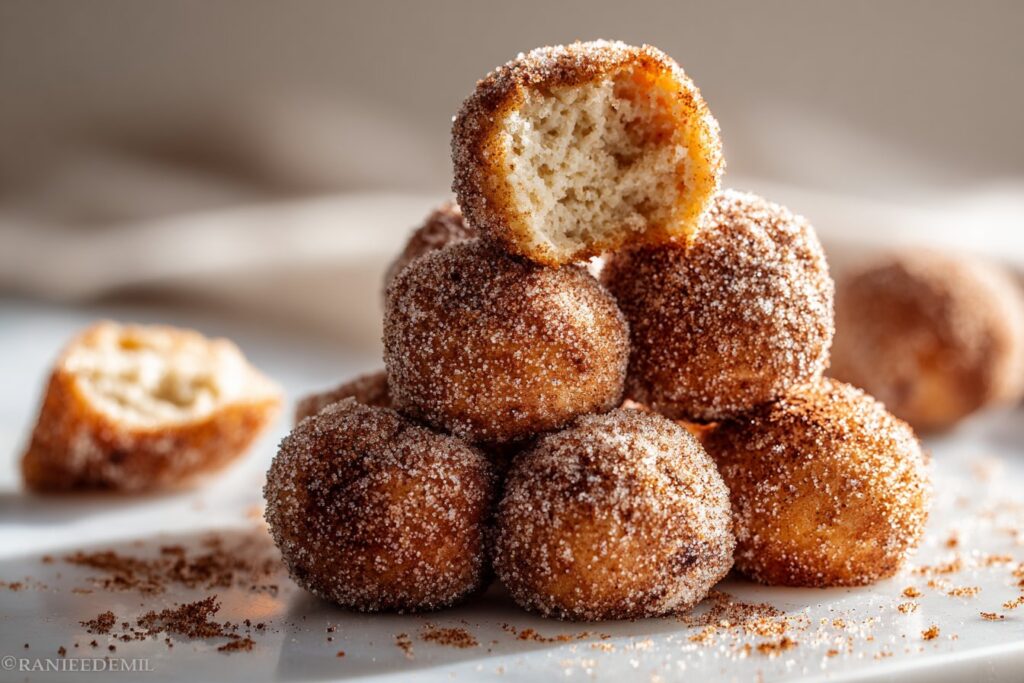
Serving Image of Keto Donut Hole
The Method (Step-by-Step)
Start by preheating your oven to 425°F / 220°C and lining a baking pan with parchment so the Keto Donut Hole batter does not stick. Whisk together almond flour, coconut flour, baking powder, psyllium husk, xanthan gum, and a pinch of salt in a large bowl so the leavening and binders distribute evenly.
In a small saucepan, bring the water to a boil, then lower the heat and whisk in the avocado oil and erythritol until the sweetener mostly dissolves. Pour the dry mixture into the hot liquid in stages, stirring constantly with a stiff spatula or wooden spoon until you have a thick, sticky dough that pulls away from the sides of the pan. Take it off the heat and let it cool for about 5 minutes so the eggs do not scramble when you add them.
Once the dough has cooled slightly, beat the eggs in a small bowl, then add them to the dough a little at a time, stirring very well between additions. At first it will look separated and lumpy, but keep going. The Keto Donut Hole dough will turn glossy and elastic as the eggs incorporate. Stir in the vanilla bean paste, then let the dough rest for 15 to 20 minutes so the psyllium and coconut flour fully hydrate and firm it up.

Process Image of Keto Donut Hole
When the dough feels scoopable, dust your hands and a small cookie scoop or spoon with almond flour. Roll the dough into 1 inch balls and space them out on the prepared pan to give them room to puff. Bake for 15 minutes, then lower the oven to 350°F / 180°C and continue baking 10 to 15 minutes, until the donut holes have golden tops and feel slightly set when you tap them.
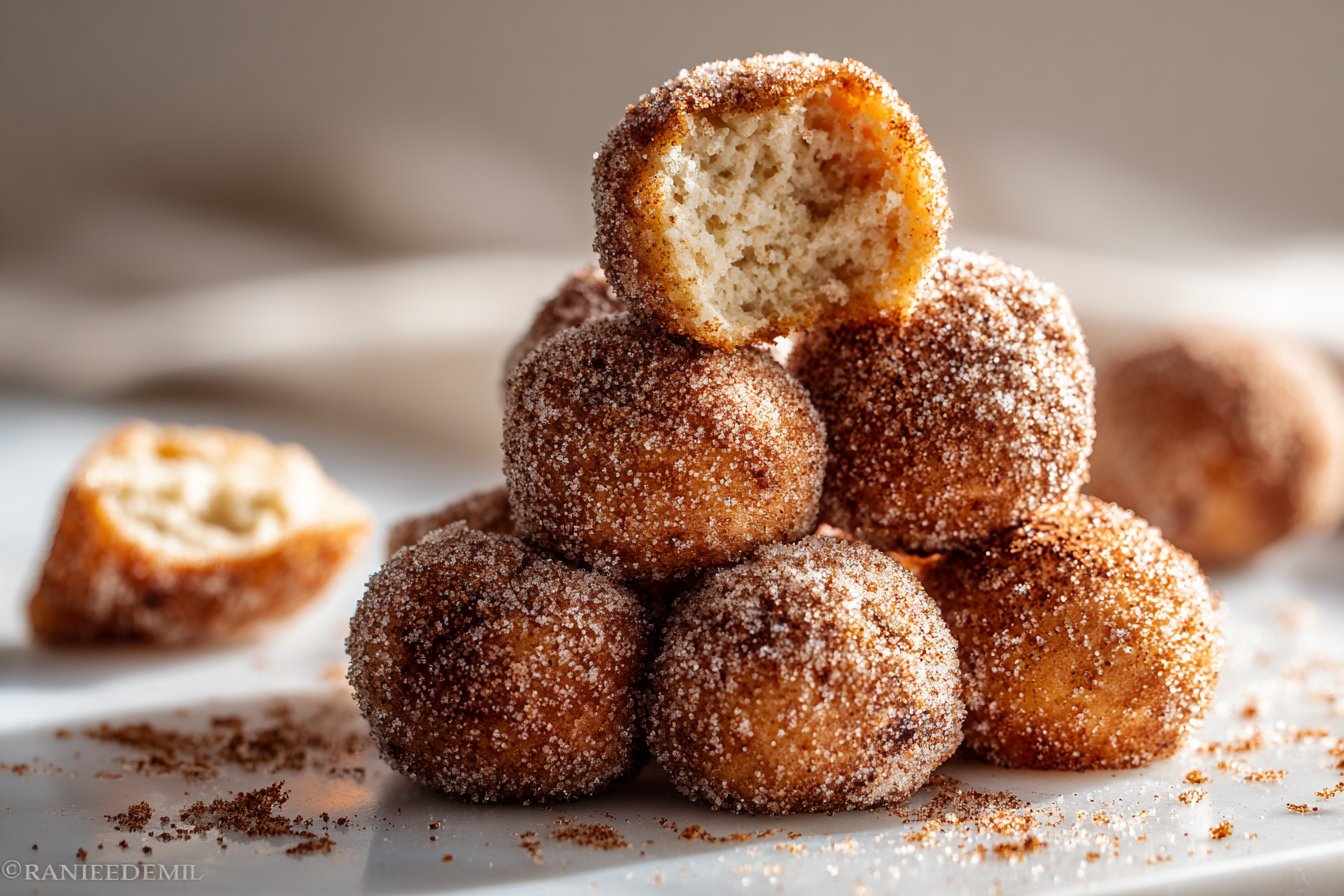
Let the Keto Donut Hole batch cool on the pan for at least 10 minutes so the structure finishes setting. This helps keep the centers tender rather than gummy. While they cool, mix granulated low carb sugar substitute, powdered erythritol, and cinnamon in a shallow plate, then roll the warm donut holes in the mixture to coat.
If you plan to pair these with something like keto hot chocolate or a low carb whipped cream dessert, you can leave a few plain and only coat the rest. If the coating does not stick well, lightly brush the donut holes with a bit of melted butter, then roll again until they have an even, cinnamon speckled shell.
Keep It Fresh: Timing and Storage
Keto Donut Hole texture is at its best within a few hours of baking, once they have cooled and the cinnamon erythritol coating has set. If you plan to serve them the same day, leave them at room temperature, loosely covered, for up to 6 hours so the exterior stays lightly crisp and the center stays soft.
After that, move any leftovers to an airtight container to keep the almond flour from drying out. Always let the Keto Donut Hole batch cool completely before storing, or condensation will make the coating soggy and patchy.
For short term storage, refrigerate your Keto Donut Hole in a shallow, airtight container for up to 5 days. Store them in a single layer when possible, or separate layers with parchment so the cinnamon sweetener does not rub off.
To refresh, warm a few donut holes in a low oven at 300°F for 4 to 6 minutes or in the microwave for 5 to 10 seconds, just until the centers feel slightly warm, not hot.
For longer storage, freeze them on a baking sheet until solid, then transfer to a freezer safe bag for up to 2 months. Thaw at room temperature, then briefly rewarm to bring back that tender, bakery style center.
Swaps, Variations, and Serving Ideas

Ingredients Image of Keto Donut Hole
You can adjust this Keto Donut Hole recipe quite a bit without losing the soft center or low carb count. For the flour, you can swap the unblanched almond flour for blanched if you want a finer, more cake like texture. You can also increase the coconut flour by 1 teaspoon if your dough feels too loose.
If you do not have avocado oil, light olive oil works nicely, or you can use melted butter for a richer flavor. Just let the dough cool well before adding the eggs so they do not scramble. Any erythritol based granulated low carb sweetener usually works here, but keep in mind that allulose and some monk fruit blends brown faster than erythritol, so watch your color near the end of baking.
For flavor tweaks, replace the vanilla bean paste with almond extract, or add 1 teaspoon of lemon or orange zest for a bright, bakery style twist.
Once the donuts are baked, you can play with coatings and fillings without leaving keto territory. Instead of a classic cinnamon sweetener coating, dust the warm Keto Donut Hole bites with powdered erythritol for a simple powdered sugar look, or roll them in a mix of cocoa powder and powdered sweetener for a chocolate version.
For a glaze, whisk powdered sweetener with a few teaspoons of heavy cream and vanilla, then dip or drizzle once the donut holes are just slightly warm so the glaze sets instead of running off.
If you want something more dessert like, serve a few Keto Donut Hole pieces with berries and whipped cream, or alongside a scoop of low carb ice cream as a quick plated dessert. They also make an easy brunch addition next to a veggie frittata or breakfast casserole, and you can use any leftovers as a base for a keto friendly trifle layered with lightly sweetened mascarpone.
Conclusion
I love that a simple tray of warm donut holes can turn an ordinary morning into something that feels a little bit special. This recipe shows that low carb baking does not have to be fussy or complicated, and you still get that cozy bakery feel right at home. You mix, bake, roll in a sweet coating, and suddenly the kitchen smells inviting and everyone starts to wander in to see what is ready.
These little bites have a way of bringing people together. They work just as well for a quiet coffee break as they do for a brunch table or movie night snack plate. You can let kids help roll them in the cinnamon sweetener or set out a plate for guests and watch them disappear one by one. If you have been missing your favorite Keto Donut Hole treat, this is your sign to preheat the oven and give it a try.
I hope this recipe becomes one you come back to whenever you want something easy, fun, and a little celebratory.
Recipe Card Image of Keto Donut Hole
Recipe
Keto Donut Hole
Ingredients
Method
- Preheat the oven to 425°F and line a baking pan with parchment paper.
- In a large bowl whisk together almond flour, coconut flour, baking powder, psyllium husk, xanthan gum, and a pinch of sea salt.
- In a small saucepan bring the water to a boil, then reduce heat to medium low and add avocado oil and 3 tbsp erythritol, whisking until mostly dissolved.
- Gradually add the dry flour mixture to the saucepan, stirring constantly until a thick, sticky dough forms and pulls from the sides of the pan.
- Remove the pan from the heat and let the dough cool for 5 minutes.
- Gradually add the beaten eggs to the warm dough, stirring vigorously after each addition until the mixture becomes smooth, glossy, and elastic.
- Stir in the pure vanilla bean paste, then let the dough rest at room temperature for 15 to 20 minutes to firm up.
- Dust your hands lightly with almond flour, then roll the dough into 1 inch balls and place them on the prepared baking pan, leaving space between each one.
- Bake at 425°F for 15 minutes, then reduce the oven temperature to 350°F and bake for 10 to 15 minutes longer, until the donut holes are golden and feel set.
- Remove the pan from the oven and let the donut holes cool on the pan for 10 minutes.
- In a shallow plate combine granulated low carb sugar substitute and ground cinnamon.
- Place powdered erythritol on a separate plate.
- Brush the warm donut holes with melted butter, roll each one first in the powdered erythritol, then in the cinnamon sugar substitute mixture until evenly coated, and serve.
Notes
- Allowing the dough to rest before shaping helps the psyllium and coconut flour hydrate and makes rolling easier.
- Let the donut holes cool for at least 10 minutes before coating so they hold their shape.
- Store leftovers in an airtight container in the refrigerator for up to 5 days, or freeze for up to 2 months.